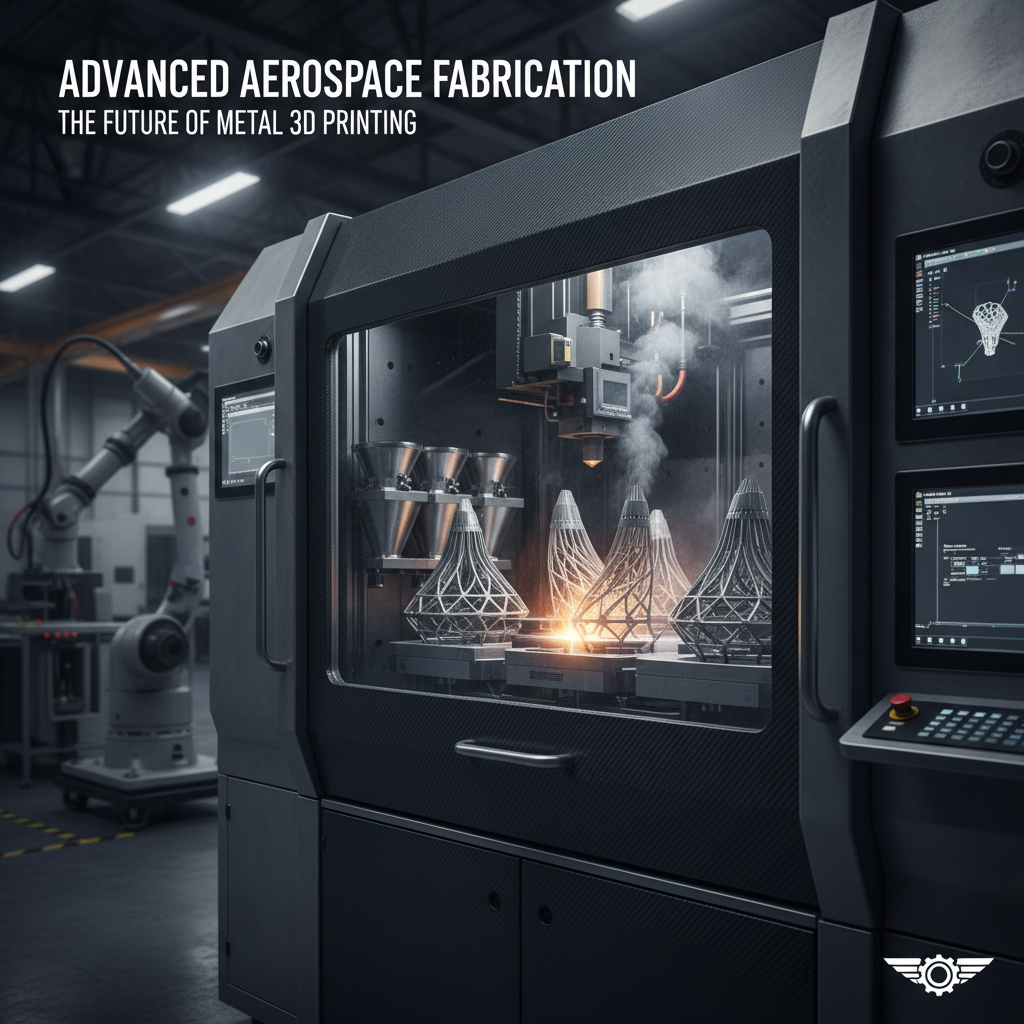

Metal Additive Manufacturing Has Crossed the Production Threshold
For the better part of two decades, metal additive manufacturing occupied a peculiar limbo - sophisticated enough to impress at trade shows, not mature enough to trust with a flight-critical part. That limbo is over. The technology has not merely improved; it has crossed a structural threshold that separates prototyping curiosity from legitimate production infrastructure, and the defense and aerospace sectors are where that crossing is most legible.
What "Production Ready" Actually Means
The phrase gets abused. Every vendor with a new powder bed system has called their machine "production ready" since roughly 2015. What separates genuine production capability from marketing language is a specific cluster of attributes: repeatability across build cycles, material certification against established specs, integration with downstream quality systems, and - critically - program office acceptance. All four conditions are now being met on active defense programs in ways that would have been implausible five years ago.
GE Aerospace's use of additive manufacturing for the LEAP engine fuel nozzle remains the canonical example, but it is worth restating why: that single component consolidates what was previously a 20-part assembly into one printed piece, runs hotter and lasts longer than its predecessor, and has been produced at scale across thousands of commercial and military aircraft. It did not stay a prototype. It became the production part. The industry needed that proof of concept to hold - and it has held.
More recently, Honeywell, Pratt & Whitney, and Safran have all advanced additive-manufactured components into production qualification on programs that cannot afford developmental heroics. Rocket Propulsion laboratory work at Aerojet Rocketdyne - now L3Harris Technologies' propulsion division - has leaned heavily on directed energy deposition and powder bed fusion for combustion chambers and injectors on programs where lead time compression is not a preference but a contractual obligation.
The Defense Supply Chain Is Forcing the Issue
Commercial aerospace has schedule pressure. Defense has something more acute: obsolescence crises and sole-source fragility. When a casting supplier for a legacy airframe closes, or when a forging house determines a low-volume defense run is not worth their floor time, program offices face a choice between a multi-year requalification of an alternate supplier or finding an alternative manufacturing path. Additive is increasingly that path.
The Department of Defense has been deliberate about this. The Industrial Base Analysis and Sustainment (IBAS) program has specifically funded additive manufacturing insertion for sustainment applications - not because additive is cheaper in unit cost terms (it often is not), but because it preserves optionality in a supply chain that has been hollowing out for thirty years. When you can print a structural bracket for a legacy aircraft rather than restart a casting line that no longer exists, the economics of the comparison shift dramatically.
The Air Force's Pacer Edge initiative and similar programs at the Navy and Army depots have moved from pilot programs to operational use in selected applications. Tinker Air Force Base and Robins Air Force Base have both invested in in-house additive capability specifically to address the sustainment gap. These are not research installations. These are depots that turn wrenches on operational aircraft, and they are now printing parts.
Material Certification: The Bottleneck That Broke
If there was a single technical constraint that kept metal additive in the anteroom of serious production, it was material certification. The aerospace industry runs on material specifications - AMS, MIL-SPEC, ASTM - and for years, printed metal parts existed in a qualification purgatory where the mechanical properties were understood in research labs but not codified in the documents that program offices and airworthiness authorities require.
That bottleneck has broken, though not cleanly. ASTM International's Additive Manufacturing Center of Excellence has driven harmonization efforts. The FAA has issued multiple policy documents clarifying the airworthiness path for additive components. AM-specific AMS specifications now exist for titanium, nickel superalloys, and stainless steels processed via powder bed fusion. This does not mean qualification is fast - it rarely is - but it means the path is defined, which is categorically different from five years ago when every program was essentially writing its own rulebook.

What will it take to turn demand into delivered output?
Explore The Capacity Imperative, our report on U.S. advanced manufacturing and the priorities shaping 2027.
Machine qualification is following a similar trajectory. EOS, Trumpf, Velo3D, and Nikon SLM Solutions have invested heavily in machine-to-machine consistency documentation because their aerospace customers require it. Velo3D's Sapphire platform, in particular, has attracted attention for its ability to print low-angle overhangs without support structures - a capability that matters enormously when you are printing complex internal cooling channels in a turbine component and support removal is not a trivial operation.
Where the Economics Actually Work
Operations directors need to hear this plainly: metal additive is not a universal cost reducer. In high-volume, geometrically simple applications with established forging or casting supply chains, additive will lose on unit economics for the foreseeable future. This is not a flaw in the technology; it is a characteristic that should inform deployment strategy.
Additive wins - clearly and defensibly - in the following conditions:
- Low-volume, high-complexity parts where tooling amortization makes conventional manufacturing uneconomical
- Topology-optimized designs that reduce weight in ways physically impossible with subtractive methods
- Consolidated assemblies where multi-part reduction offsets higher per-part cost
- Obsolete or sole-source components where the alternative is a multi-year lead time or a supplier requalification
- Rapid iteration environments - developmental programs where design changes are frequent and tooling investment would be punitive
The F-35 program has incorporated additive components across multiple systems, and Lockheed Martin has been candid that the driving logic is often lead time and design flexibility rather than pure unit cost savings. Boeing's use of additive on the 777X and various defense platforms reflects the same calculus. These are not companies operating on thin margins making sentimental bets on emerging technology. They are making hard-nosed production decisions.
The Workforce and Quality System Implications
Executives who greenlight additive manufacturing insertion sometimes underestimate what it demands of the quality infrastructure around it. A powder bed fusion machine is not a CNC mill. The process variables - laser power, scan strategy, powder lot traceability, build orientation, thermal history - all feed into the final part's mechanical properties in ways that require in-process monitoring, not just post-process inspection.
Computed tomography for internal feature verification, in-situ melt pool monitoring, and statistical process control adapted for additive process signatures are not optional overlays. They are the quality architecture the technology requires. Shops that have tried to run additive production through conventional inspection protocols have encountered qualification failures that set programs back substantially.
Workforce implications follow directly. The technician who programs and oversees a metal AM build cell needs a different skill set than the machinist running turning centers next door. The overlap is not zero - metrology, material understanding, and manufacturing discipline transfer - but the additive-specific knowledge around build preparation, support strategy, and post-processing is substantial. Companies that have moved fastest on additive insertion have typically built dedicated additive cells with specialized personnel rather than attempting to graft the technology onto existing machining departments.
The Competitive Clock Is Running
There is a geopolitical dimension to this conversation that polite trade coverage tends to understate. China's national additive manufacturing strategy - backed by substantial state investment and integrated into its aerospace and defense industrial complex - is not theoretical. Chinese aerospace primes are printing structural titanium components for aircraft programs, and the manufacturing knowledge being accumulated at scale has long-term implications for the competitive posture of Western defense suppliers.
This does not mean every American manufacturer needs a powder bed system by next quarter. It means that companies sitting on the sidelines waiting for the technology to mature further are making a calculation with a time dimension they may be underweighting. The technology is mature enough. The certification infrastructure exists. The workforce training programs - through America Makes, community college partnerships, and OEM training initiatives - are available.
The question facing operations directors and plant managers in the defense supply chain is no longer whether metal additive manufacturing works at production scale. It does. The question is whether your organization has built the internal capability to use it - or whether you will be explaining to a program office in three years why your lead times are six months longer than a competitor who made different choices today. Metal additive has crossed the production threshold. The only remaining question is whether your operation is on the right side of it.

