
Lockheed, Boeing, and the Race to Domesticate Titanium Forging — September 2026
When the Soviet Union's titanium-rich Siberian deposits fueled Cold War airframe production, American defense planners filed the vulnerability away as an acceptable risk. Forty years later, that risk has a invoice attached to it. The Department of Defense is now confronting a titanium supply chain so dependent on foreign sources — Russia and China together once controlled a dominant share of aerospace-grade sponge supply — that it has become a line item in national security planning, not just procurement scheduling.
The Dependency Problem Is Structural, Not Incidental
Titanium's role in defense aerospace is not decorative. Lockheed Martin's F-35 Lightning II program consumes an estimated nine pounds of titanium for every pound of finished structural component — a buy-to-fly ratio that makes the metal's provenance a matter of operational consequence, not supplier preference. The F-35 Joint Program Office has spent the better part of three years auditing second- and third-tier forging sources following the 2022 sanctions environment that effectively removed Russian titanium supplier VSMPO-AVISMA from Western aerospace supply chains. That single supplier had been providing titanium to Boeing, Airbus, and others for decades — a relationship so normalized it barely registered as a concentration risk until it did.
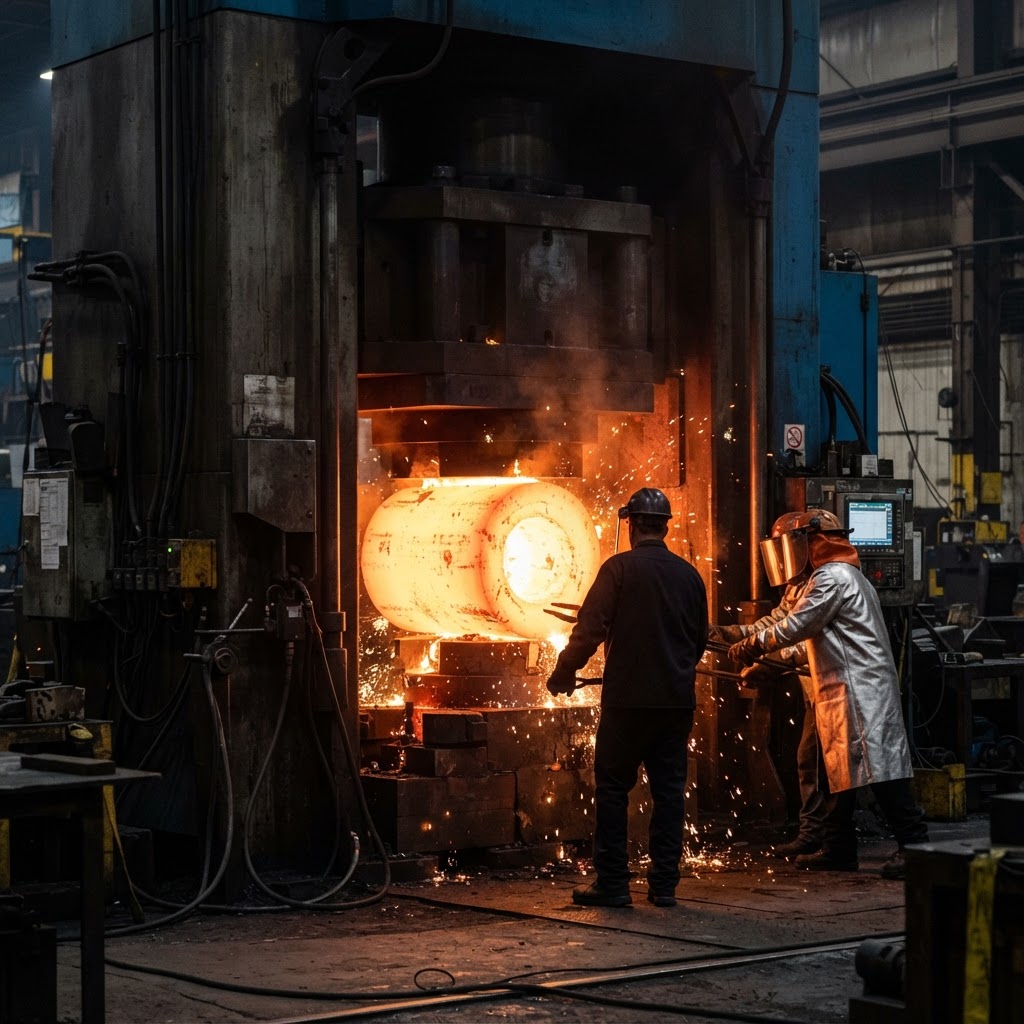
Boeing's 777X program and the ongoing B-21 Raider production ramp at Northrop Grumman have compounded demand pressure. The B-21, currently in low-rate initial production under a contract structure that has drawn consistent Congressional scrutiny for cost trajectory, requires large titanium forgings for airframe bulkheads that cannot be sourced from standard commercial stock. These are not catalog items. They are custom, multi-thousand-pound forgings produced on hydraulic presses that number fewer than a dozen in operational condition across the entire United States.
The Forging Bottleneck Nobody Wanted to Talk About
America's large-frame forging capacity is, to put it plainly, undersized for the production ambitions currently written into defense budgets. The 50,000-ton hydraulic press at Alcoa's Cleveland facility and the comparable press at Weber Metals in Paramount, California represent the upper ceiling of domestic capability for the largest structural titanium components. Weber's press — a 60,000-ton behemoth recapitalized with significant private investment — is currently operating under near-capacity load commitments. The waiting list for forging slots on that machine is not measured in weeks.
The Defense Production Act Title III program has been the primary federal instrument for correcting this. DoD's Office of Industrial Base Policy authorized investments in domestic titanium sponge production and forging capacity expansion as part of broader supply chain resilience initiatives tied to the National Defense Authorization Act priorities for FY2025 and FY2026. Titanium Metals Corporation (TIMET), now operating under Precision Castparts Corp, has been a primary beneficiary of those Title III allocations. The dollar figures attached to these investments run into the hundreds of millions when aggregated across forging, sponge, and melt capacity — serious capital for an industrial base that had been starved of it for two decades.
"The United States has spent thirty years optimizing titanium out of its cost models and is now spending emergency capital to buy it back into its industrial base."

What will it take to turn demand into delivered output?
Explore The Capacity Imperative, our report on U.S. advanced manufacturing and the priorities shaping 2027.
Lockheed's response has been more vertical than Boeing's. The company has pursued long-term supply agreements with domestic forgers and, through its supply chain organization, has been pushing Tier 1 suppliers to dual-qualify forging sources — a requirement that sounds straightforward until you account for the qualification timelines, which run 18 to 36 months for flight-critical components on programs like the F-22 and F-35.
Congressional Pressure and the Industrial Policy Architecture Taking Shape
The legislative scaffolding around this issue has been building with unusual bipartisan consistency. The Senate Armed Services Committee's markup of the FY2026 NDAA included provisions directing DoD to report on large-frame forging capacity gaps and to establish procurement preferences for domestically produced titanium forgings on major defense acquisition programs. The House version carried similar language, along with a provision restricting the use of Chinese-origin titanium on covered defense contracts — a measure that mirrors the restrictions already in place for rare earth magnets under Section 848 of the FY2023 NDAA.
DARPA's ongoing work in additive manufacturing for structural metals is frequently cited as a long-term hedge against forging bottlenecks, and programs like the Titanium Aerospace Parts via Additive Manufacturing initiative under the Open Manufacturing program have demonstrated near-net-shape titanium production that could, in theory, reduce dependence on large press forgings for certain geometries. The operative phrase is "in theory." Additive titanium components are not yet qualified for primary structure on production fighter programs at scale. The certification pathway through FAA and Defense Contract Management Agency remains a multi-year proposition.
What This Means for Tier 2 and Tier 3 Suppliers
The capital flowing into domestic titanium forging capacity will not distribute evenly. Primes are tightening their approved supplier lists, not expanding them, and the qualification bar for new entrants has risen in direct proportion to program criticality. For smaller fabricators and precision machining shops operating in the defense aerospace supply chain, the practical implications are specific:
- Dual-source qualification is now a competitive differentiator. If your facility can demonstrate an alternate material or process source for titanium components you currently supply from a single origin, that capability has tangible contract value in the current risk environment. Document it and present it proactively.
- AS9100 Rev D and NADCAP accreditation are table stakes, not differentiators. What moves the needle now is traceability infrastructure — material genealogy from sponge to finished part. Primes under DCMA audit pressure are passing that pressure downstream.
- Press capacity access is becoming a subcontract negotiation point. Tier 2 machining shops that have established relationships with Weber Metals, Arconic, or TIMET for forging blanks are in a structurally better position than those buying from brokers. If you are currently broker-dependent for titanium forging stock, that exposure will surface during prime contractor supply chain reviews.
- Watch the Defense Production Act Title III solicitations. DoD's Industrial Base Analysis and Sustainment program periodically releases funding opportunities specifically targeting forging and materials capacity. These are not widely publicized, and small manufacturers with relevant process capabilities consistently underutilize them.
- Workforce qualification is the quiet constraint. Operating large hydraulic forging presses, performing titanium weld repair, and running the inspection protocols required for flight-critical forgings requires certified personnel that cannot be trained in a quarter. Shops investing in workforce certification programs now are building a lead time advantage that will matter when the capacity expansion investments actually come online — likely 2027 to 2029.
The race to domesticate titanium forging is fundamentally an industrial policy story wearing an aerospace headline. Lockheed and Boeing are the visible protagonists, but the outcome will be determined in the press bays and machine shops of the Tier 2 and Tier 3 base — facilities that have spent years optimizing for cost in an environment that is now, without much ceremony, optimizing for something else entirely.
Sources: Defense Production Act Title III — DoD · Weber Metals Press Capabilities · F-35 Joint Program Office · DARPA Open Manufacturing Program · Precision Castparts Corp / TIMET

