
Why Every Tier 2 Supplier Needs a Robot Readiness Assessment Right Now
The OEMs are not waiting for you. Ford, GM, and Stellantis have spent the last three years hardwiring automation expectations into their supplier scorecards - and if you're a Tier 2 operation still running largely manual lines, the gap between where you are and where the supply chain demands you be is closing faster than most plant managers want to admit.
This isn't a future problem. It's a right-now problem.
The Pressure Is Coming From Both Directions
Tier 1 suppliers - the Magna Internationals, the Lear Corporations - are themselves under relentless margin compression. They're automating aggressively, and as they do, they're pushing cycle time, quality, and traceability requirements down the chain. What was once a Tier 1 expectation becomes a Tier 2 contract requirement, sometimes with as little as 18 months' notice.
At the same time, labor market fundamentals aren't improving. Manufacturing job openings have remained stubbornly elevated. Turnover on repetitive assembly and handling tasks runs high. Every experienced operator who walks out the door takes institutional knowledge with them - knowledge that a robot, properly deployed, would have encoded into a repeatable process years ago.
The suppliers who are thriving right now aren't the ones who made the biggest automation bets. They're the ones who made the right automation bets - the ones who knew exactly where they stood before they bought a single cobot.
What a Robot Readiness Assessment Actually Is
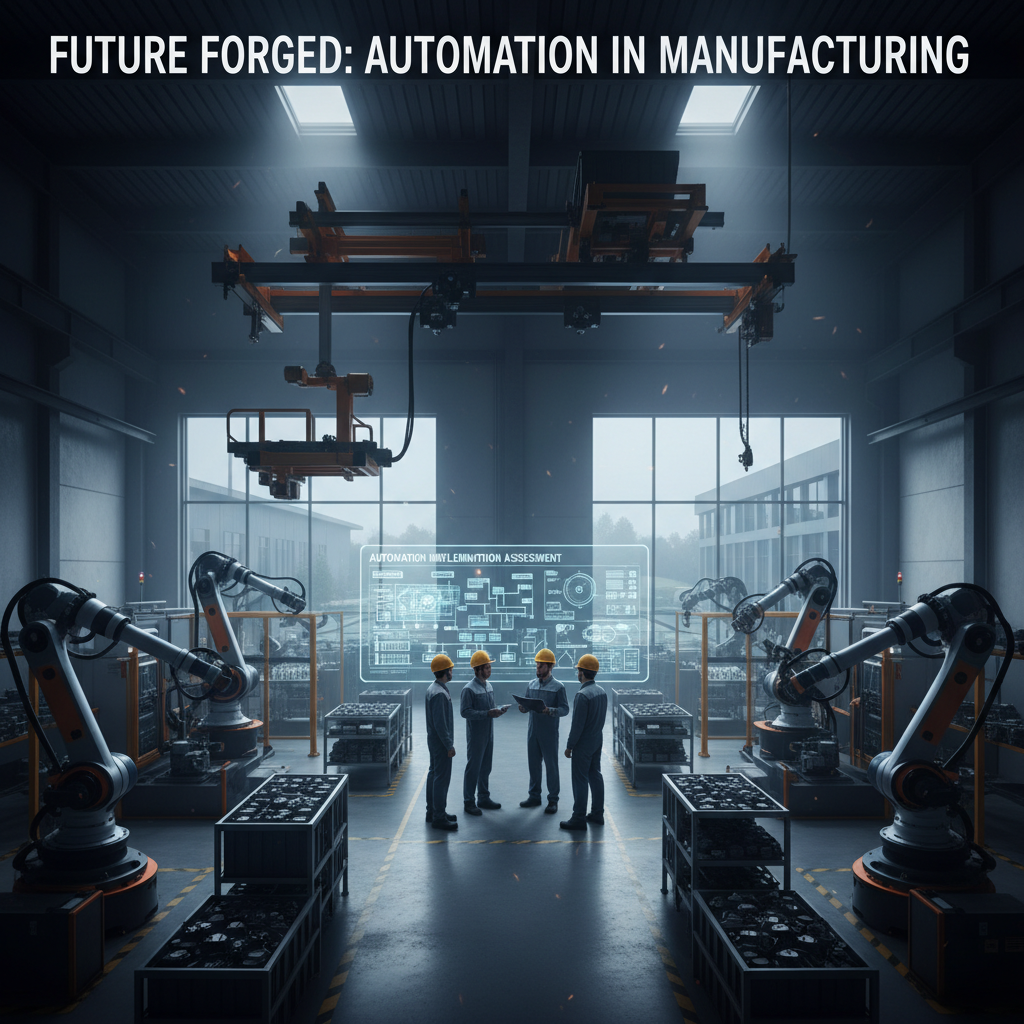
Let's be precise. A Robot Readiness Assessment (RRA) is a structured operational audit designed to answer three questions:
- Where are your automation opportunities? Which tasks - by station, by shift, by line - are candidates for robotic deployment based on cycle time, repeatability, and ergonomic risk?
- Where are your blockers? Layout constraints, tooling variability, material inconsistency, or IT/OT infrastructure gaps that would undermine a deployment before it starts.
- What's your realistic ROI horizon? Not the vendor's pitch deck math. Your math, based on your labor costs, your reject rates, your downtime data.
A rigorous RRA typically involves process mapping, time-motion analysis, a shop floor walk with both operations and engineering present, and a hard look at your MES and quality data. It's not a sales call dressed up as a consultation. Done correctly, it's closer to a surgical pre-op than a brochure.
Organizations like the Manufacturing Extension Partnership (MEP) National Network - part of NIST - have been facilitating exactly this kind of assessment for small and mid-sized manufacturers for years. Many Tier 2 suppliers qualify for subsidized or cost-shared assessments through their regional MEP center. If you haven't tapped that resource, you're leaving money on the table before automation even enters the conversation.
The Mistake Most Tier 2 Plants Are Making
The most common automation mistake isn't buying the wrong robot. It's buying a robot before understanding the process.

What will it take to turn demand into delivered output?
Explore The Capacity Imperative, our report on U.S. advanced manufacturing and the priorities shaping 2027.
Walk enough Tier 2 plants and you'll find the same story: a collaborative robot arm - a Universal Robots UR10, maybe a FANUC CRX - sitting underutilized, running at a fraction of its designed throughput, because the surrounding process wasn't ready for it. The cell was designed around the robot instead of the robot being designed into the cell.
This happens because procurement moves faster than operations planning. A plant manager sees a compelling demo at IMTS, gets a quote, gets budget approval, and suddenly there's a robot arriving before anyone has done the unglamorous work of process standardization.
An RRA forces that sequence to reverse. Assess first. Standardize second. Deploy third.
Why the Timing Is Specifically Urgent Right Now
Three converging forces make this the wrong moment to wait:
1. Reshoring is loading American Tier 2 capacity. The CHIPS Act, the Inflation Reduction Act, and broader nearshoring trends are pulling manufacturing back to U.S. soil - but the labor supply isn't scaling to match. Tier 2 suppliers winning new contracts need throughput, and they need it without proportional headcount growth. Automation is the only credible path.
2. The technology window is unusually accessible. Cobot prices have declined significantly over the past decade. Vision systems have matured. Simulation tools like RoboDK and FANUC's ROBOGUIDE allow virtual cell commissioning before you spend a dollar on physical integration. The barriers to entry are lower than they've ever been - but that also means your competitors are walking through the same door.
3. Customer requirements are tightening on traceability. Automotive and aerospace customers increasingly require part traceability and in-process inspection data that manual operations simply cannot generate at scale. Robotic cells, integrated with vision and MES, close that gap. Suppliers who can't provide the data will lose the business - quietly, on renewal, when the contract simply doesn't come back.
What This Means for Your Floor
If you're an operations director or plant manager at a Tier 2 facility, here's the practical takeaway:
- Don't start with a robot. Start with the assessment. If you don't know your highest-impact automation opportunities, you're guessing - and guessing with capital equipment is expensive.
- Engage your regional MEP center this quarter. The National Institute of Standards and Technology maintains a locator at nist.gov. Many centers offer manufacturing assessments at reduced cost for qualifying facilities. This is not a small thing.
- Pull your labor cost data, your scrap rates, and your downtime logs before any vendor conversation. Walk into that room with your numbers, not theirs.
- Include your maintenance team early. The most successful automation deployments at the Tier 2 level are the ones where maintenance owns the cell from day one, not day ninety.
- Set a 90-day decision gate. Commit to completing an RRA within 90 days and having a prioritized automation roadmap - even if the roadmap says 'not yet' for certain stations. Clarity is the point.
The Floor Doesn't Lie
The manufacturers who will hold their Tier 2 positions through the next wave of automotive electrification and aerospace ramp-up are not necessarily the ones with the most robots. They're the ones with the clearest operational picture - the ones who walked their floor with honest eyes, identified where human labor is underutilized or at risk, and built a deployment sequence that actually fits their process.
A Robot Readiness Assessment is how you get that picture. Not because it's a trendy exercise, but because in a supply chain that is actively rewarding operational intelligence, not knowing where you stand is itself a competitive disadvantage. The assessment costs far less than a misaligned deployment. And a misaligned deployment costs far less than a lost contract.
Do the work now, while you still have the runway to act on what it tells you.

