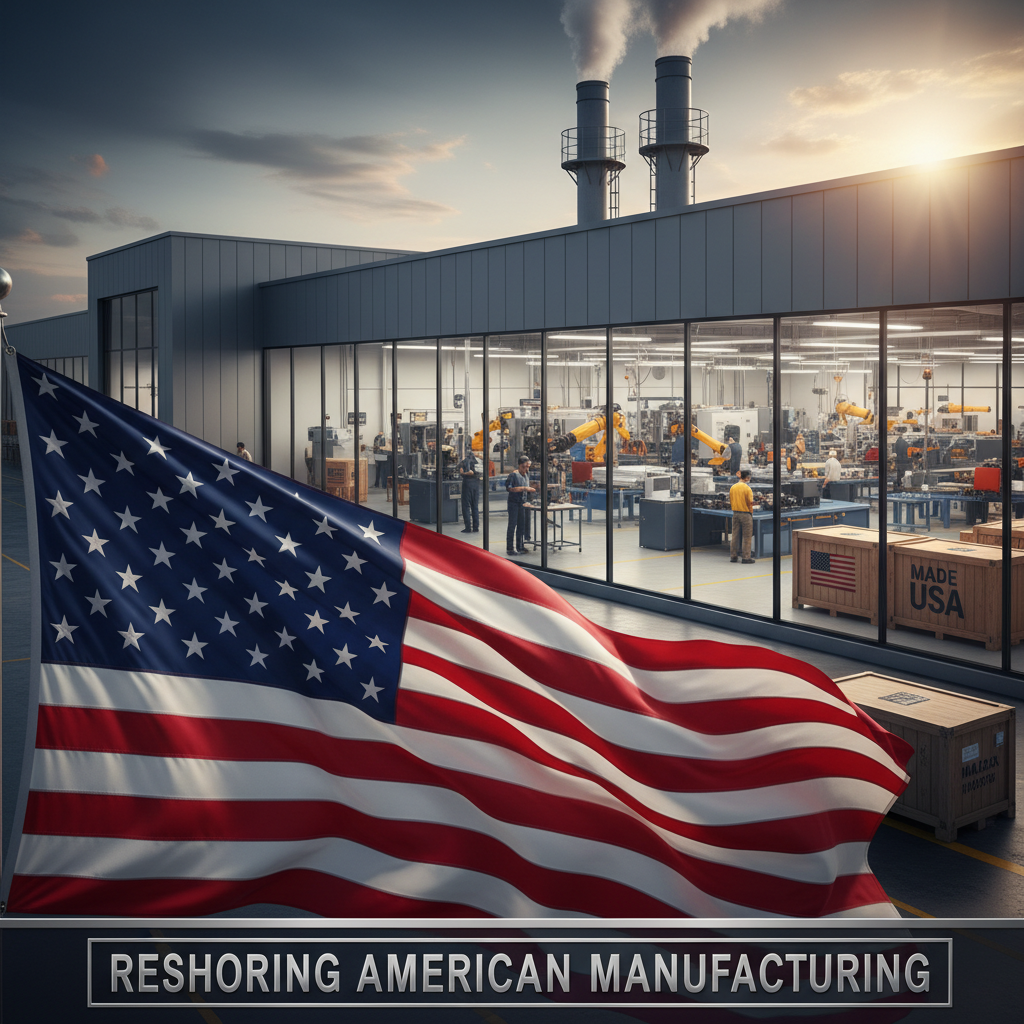

The Reshoring Report Card: Which Industries Are Actually Coming Back
The reshoring narrative has been sold hard for three years. Now it's time to grade the actual results - because not every sector that promised a comeback is delivering one.
For operations leaders making capital allocation decisions, the difference between a sector on a genuine return trajectory and one still producing press releases matters enormously. Here's where things actually stand.
Semiconductors: An A - With Asterisks
Semiconductor manufacturing is the reshoring story with the most structural momentum behind it. The CHIPS and Science Act injected over $52 billion into domestic production incentives, and the results are tangible. TSMC's Arizona fabs, Intel's Ohio and Arizona expansions, and Micron's New York investment represent genuine, long-cycle manufacturing commitments - not supplier diversification theater.
But execution is the asterisk. TSMC has pushed back production timelines. Skilled workforce gaps in advanced node fabrication remain acute. The tooling supply chain for leading-edge fabs is still heavily concentrated in the Netherlands and Japan.
Grade: B+. The capital is committed. The workforce and supplier infrastructure are not yet.
Pharmaceuticals & Medical Devices: B
COVID exposed catastrophic API dependency on China and India with brutal clarity. The industry responded - slowly at first, then with urgency as geopolitical risk premiums escalated.
Eli Lilly, Pfizer, and several CDMOs have announced domestic production expansions. The FDA's drug shortage list remains a forcing function. Medical device manufacturers, particularly in diagnostics and PPE, have made more durable gains than pharma because the capital requirements are lower and the regulatory pathway is shorter.
The constraint here is economics. Domestic API production costs remain structurally higher than Asian alternatives. Without sustained procurement mandates - federal or commercial - the business case for full reshoring depends heavily on continued political will.
Grade: B. Real progress, fragile economics.
Electric Vehicles & Battery Manufacturing: B-
The Inflation Reduction Act's domestic content provisions created a hard incentive structure for EV and battery supply chains. The manufacturing announcements that followed - from Panasonic in Kansas, Samsung SDI in Indiana, LG Energy Solution across multiple states - are real.

What will it take to turn demand into delivered output?
Explore The Capacity Imperative, our report on U.S. advanced manufacturing and the priorities shaping 2027.
But the sector is under pressure. EV demand softened faster than plant timelines. Several announced gigafactory projects have been delayed or scaled back. Ford's Michigan battery plant partnership with CATL faced intense political scrutiny. The supply chain for critical minerals - lithium, cobalt, nickel - remains overwhelmingly non-domestic.
This is a sector reshoring its assembly and cell manufacturing while the upstream extraction and processing chain lags by a decade or more.
Grade: B-. Strong middle-of-chain progress, weak upstream.
Aerospace & Defense: A-
Defense reshoring is the quiet outperformer. The combination of National Defense Authorization Act requirements, sole-source contracts, and a renewed focus on defense industrial base resilience has pulled significant production back onshore - often without the fanfare of consumer-facing sectors.
- Titanium and specialty alloy sourcing is actively shifting away from Russian suppliers
- Precision machining capacity is expanding across the Midwest and Southeast
- Lockheed, RTX, and Northrop Grumman are deepening domestic supplier qualification programs
Aerospace benefits from a structural advantage: ITAR compliance and export control requirements have always limited offshoring options. The current environment is accelerating investment in what was already a domestically anchored industry.
Grade: A-. Momentum is real and self-reinforcing.
Consumer Goods & Apparel: D+
Here's where the scorecard gets uncomfortable. Apparel and general consumer goods reshoring has been largely aspirational. Despite years of near-shoring rhetoric, Vietnam, Bangladesh, and Mexico continue to absorb production volume that was supposed to return to U.S. soil.
A handful of brands - American Giant, some premium footwear manufacturers - have built domestic production into their value proposition. But at scale, the labor cost differential remains prohibitive without tariff structures that haven't materialized consistently.
Grade: D+. Marketing narrative exceeds operational reality.
What Operations Leaders Should Do With This
The honest read: reshoring is happening where policy incentives are durable, where geopolitical risk is acute, or where regulatory requirements make offshoring structurally difficult. It is not happening because of patriotic sentiment or supply chain disruption memories alone.
If you're in semiconductors, defense, or medical devices, the infrastructure investments are real and supplier qualification timelines should be accelerating now - not when the next shock hits.
If you're in consumer goods, build a Mexico and nearshore strategy before assuming domestic production economics will close. They won't close fast enough.
Reshoring isn't a tide lifting all manufacturing boats. It's a targeted set of sector bets - and in 2025, the window for positioning inside the winning sectors is narrower than the headlines suggest.

