
The Immigration Policy Trap Squeezing Manufacturing Labor Markets
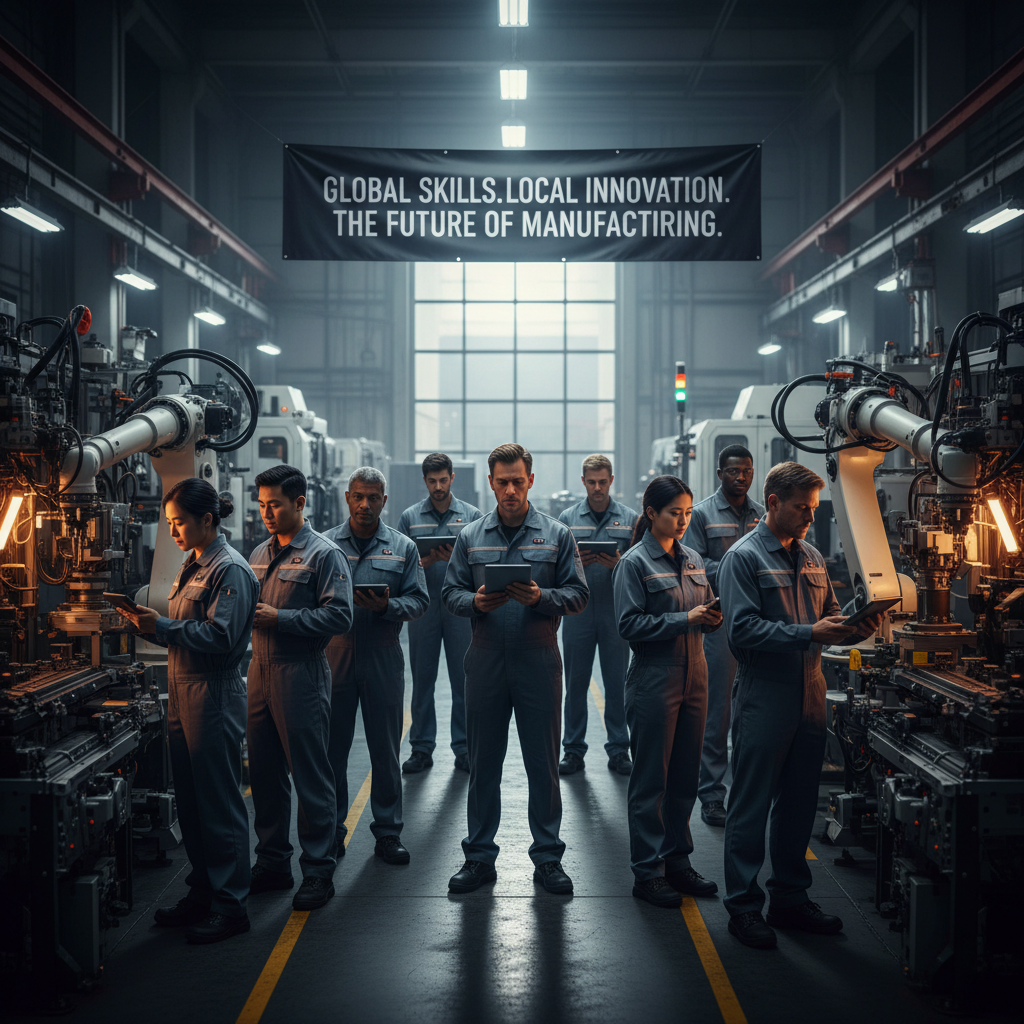
On the floor of a precision machining facility outside of Tulsa, a shift supervisor named Marcus keeps a running mental list. It's not a list of orders or machine maintenance schedules. It's a list of open seats - positions he's been trying to fill for the better part of two years. Some of those seats belong to workers whose visa paperwork is somewhere in a federal backlog. Others belong to people who never came at all, deterred by a process that moves slower than the equipment Marcus is trying to run at full capacity.
Marcus's situation is not unusual. Across American manufacturing, plant managers and operations directors are navigating a labor market that is being squeezed from multiple directions simultaneously - and immigration policy is increasingly the hidden variable that nobody in the boardroom wants to talk about plainly.
The Structural Gap That Policy Ignores
American manufacturing has a workforce problem that predates the pandemic and outlasts every economic cycle. The sector needs workers - skilled, semi-skilled, and entry-level - and domestic pipelines are not filling the gap fast enough. The Manufacturing Institute has documented persistent shortages in production roles, and the challenge deepens as experienced workers retire and technical training programs struggle to scale at the pace industry demands.
Immigration has historically served as a pressure valve for exactly this kind of structural labor shortfall. But the current policy environment - characterized by processing delays, annual cap constraints, and administrative uncertainty - has transformed that valve into something closer to a wall.
The H-2B visa program, designed for temporary non-agricultural workers, is a useful case study in systemic dysfunction. The program operates under congressionally mandated caps that were set decades ago and have not been meaningfully updated to reflect modern labor realities. Manufacturers and industrial employers who rely on seasonal or cyclical production surges find themselves competing in a lottery-style allocation system that bears no relationship to actual economic need. Some years, supplemental cap relief is granted through executive action. Other years, it isn't. Workforce planning cannot survive that kind of volatility.
Skilled Trades and the Visa Ceiling Problem
The challenges aren't limited to lower-wage production roles. The H-1B program, the primary pathway for skilled foreign workers, is similarly constrained - and it was designed primarily for professional and technology roles, not for the specialized manufacturing technicians, mechatronics engineers, and advanced welding specialists that factories increasingly need.
Companies like Siemens, Rockwell Automation, and mid-sized precision manufacturers operating in aerospace and medical device supply chains often need workers with very specific technical certifications - credentials that exist in abundance in countries like Germany, South Korea, and India, but are in short supply domestically. The pathway to bring those workers to American shop floors is expensive, slow, and unreliable. Many manufacturers, particularly smaller Tier 2 and Tier 3 suppliers, simply don't have the legal and HR infrastructure to navigate it effectively.

What will it take to turn demand into delivered output?
Explore The Capacity Imperative, our report on U.S. advanced manufacturing and the priorities shaping 2027.
The result is a competitive disadvantage that compounds over time. A plant that cannot staff a second shift cannot take on new contracts. A plant that cannot take on new contracts cannot invest in automation. A plant that cannot invest in automation cannot compete on the timeline that reshoring demands.
The Reshoring Paradox
Here is the uncomfortable irony at the center of current policy: the same political environment that champions domestic manufacturing revival is producing immigration restrictions that undermine it.
The CHIPS and Science Act, the Inflation Reduction Act, and the broader reshoring narrative have generated genuine capital investment in American manufacturing infrastructure. New semiconductor fabs, battery gigafactories, and electric vehicle assembly plants are being built or expanded. But building the facility is only half the equation. Staffing it is the other half - and staffing it on an aggressive timeline in regions that don't have deep existing manufacturing labor pools requires workforce solutions that current immigration architecture is not designed to deliver.
TSMC's Arizona facility has been candid about workforce challenges. Intel's domestic expansion has run into similar headwinds. These are not failures of corporate will. They are structural collisions between ambitious industrial policy and an immigration system that was not updated to support it.
What Operators Can Actually Do
For plant managers and operations leaders working within the current constraints, the practical path forward involves several parallel strategies:
- Invest early in immigration legal support. Companies that treat immigration counsel as a core HR function - not a reactive cost - move faster when windows open.
- Build relationships with community colleges and workforce boards that have existing pipelines to immigrant and refugee communities already legally present in the U.S.
- Engage industry associations actively. Organizations like the National Association of Manufacturers and sector-specific groups are the most credible voices in legislative conversations about cap relief and program reform.
- Document your workforce gaps formally. Data on unfilled roles, lost contracts, and delayed production strengthens the policy case that the industry needs to make loudly and consistently.
The Stakes Are Concrete
This is not an abstract policy debate. Every unfilled seat on Marcus's floor is a constraint on output, a drag on competitiveness, and a signal to customers that delivery timelines carry risk. American manufacturing's resurgence is real, but it is operating on a narrower margin than the headlines suggest. The immigration policy trap is not inevitable - it is the product of choices that can be revised. The question is whether the industry will make enough noise, with enough specificity, to force that revision before the next generation of facilities comes online understaffed.

