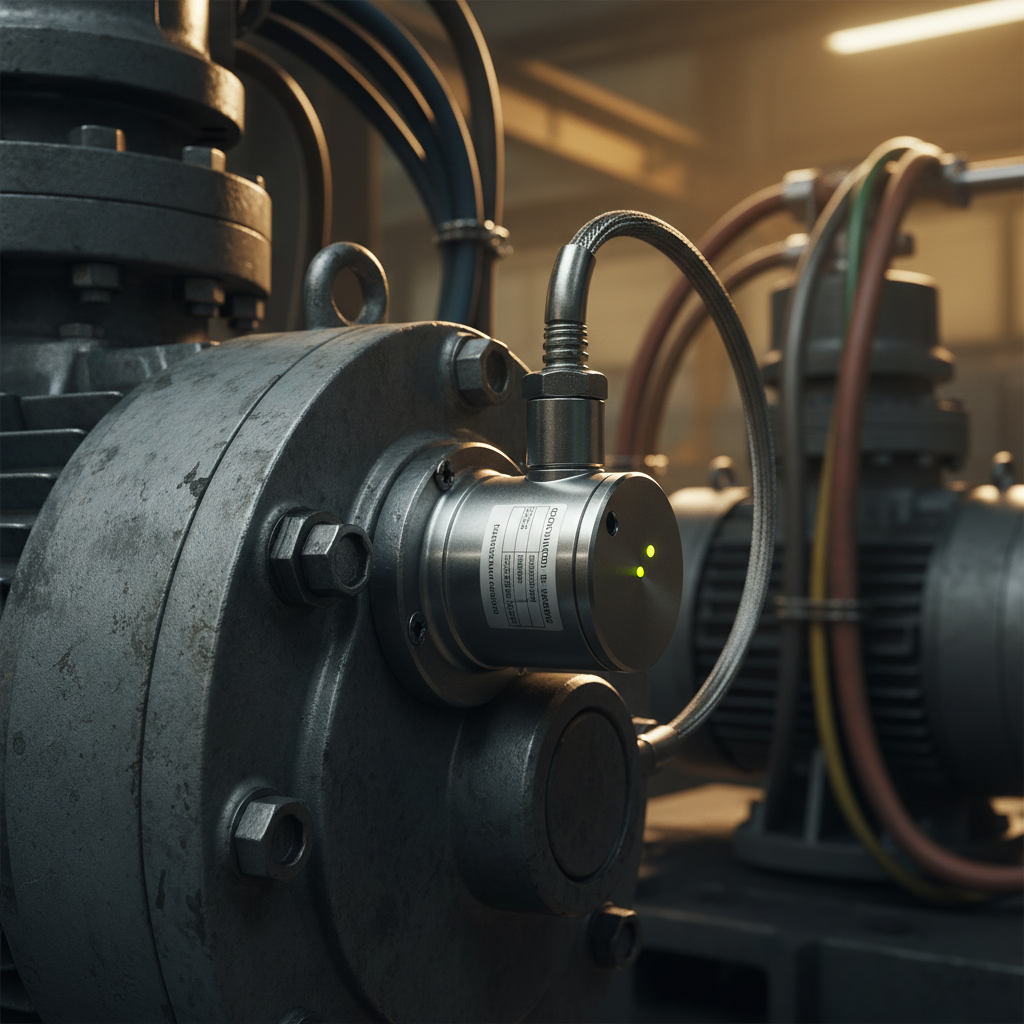

The $50 Sensor That Could Save a $5M Machine
A bearing fails. You don't know until the gearbox seizes, the line stops, and a maintenance crew is staring at a six-figure repair bill - plus three days of unplanned downtime. The machine that failed cost more than most people's homes. The sensor that could have caught it costs less than a dinner out.
This isn't a hypothetical. It's the operating reality for too many American manufacturers still running critical assets on scheduled maintenance cycles and gut instinct.
The Problem: Reactive Culture in a Precision Economy
U.S. manufacturers lose an estimated $50 billion annually to unplanned downtime, according to Deloitte's widely cited operations research. In heavy industries - automotive stamping, aerospace machining, chemical processing - a single unplanned outage on a critical asset can wipe out weeks of margin.
The core issue isn't aging equipment. It's information latency. Plant managers often know something is wrong only after a machine has already failed. Scheduled maintenance, the traditional fallback, is expensive in its own right - roughly 30% of planned maintenance work is performed unnecessarily, per industry estimates from organizations like the Society of Maintenance & Reliability Professionals.
You're either fixing things too late or too early. Neither is acceptable at scale.
The Insight: Vibration Data Is the Canary
In 2022, a mid-sized Tier 1 automotive supplier operating stamping lines in the Midwest piloted a predictive maintenance program using industrial-grade vibration and temperature sensors - commodity hardware in the $40–$80 range per unit - networked across their highest-value presses.
The result wasn't magic. It was math.
Vibration signatures on rotating equipment change measurably weeks before a mechanical failure becomes visible or audible. Accelerometers capture those shifts in real time. Pair that raw data with basic edge computing - even a low-cost gateway device - and you can flag anomalies, trend degradation curves, and trigger maintenance windows before the asset reaches failure threshold.
The supplier reported catching two imminent gearbox failures within the first six months of deployment. Combined replacement cost of the gearboxes: under $40,000. Estimated cost of the unplanned downtime and downstream line disruption those failures would have caused: multiples of that figure.

What will it take to turn demand into delivered output?
Explore The Capacity Imperative, our report on U.S. advanced manufacturing and the priorities shaping 2027.
This pattern is repeating across the industry. Companies like SKF, Emerson, and Honeywell have built entire predictive maintenance platforms around this premise - and their enterprise clients are validating the ROI. But the core technology driving those platforms is accessible to operations of every size.
What Makes This Scalable Now
Three forces have converged to make low-cost sensor-driven predictive maintenance viable for mid-market manufacturers:
- Sensor hardware costs have dropped dramatically. MEMS-based accelerometers and thermocouples that once required specialized procurement are now catalog items available through industrial distributors.
- Wireless protocols have matured. IO-Link and WirelessHART have reduced installation complexity significantly - no hardwiring every sensor back to a PLC.
- Cloud and edge analytics are accessible. Platforms from AWS Industrial, PTC ThingWorx, and others have brought machine learning-assisted anomaly detection within reach of operations teams without deep data science benches.
The Department of Energy's Advanced Manufacturing Office has also been pushing this transition through grant programs and technical assistance - specifically targeting small and mid-size manufacturers who lack the capital to deploy full-scale digital twin infrastructure but can implement targeted sensor networks on critical assets.
The Recommendation: Start Narrow, Start Now
Don't try to instrument your entire facility. That path leads to integration paralysis and shelf-ware.
Identify your top five highest-consequence assets - the machines where an unplanned failure causes the most damage, the longest line stoppage, or the greatest safety risk. These are your pilot targets.
Deploy vibration and temperature monitoring on those assets first. Establish baselines over 60–90 days. Use threshold-based alerting before you ever touch machine learning. Get your maintenance team reading the data and building instincts around it.
Once you've demonstrated value - and you will - the business case for expanding the network writes itself. The sensors pay for themselves before the ink dries on the purchase order.
The Actual Risk
The manufacturers who resist this aren't saving money. They're deferring a bill they can't predict and can't control. In a competitive environment where margins are tight and customer delivery windows are unforgiving, that's not conservatism - it's exposure.
A $50 sensor won't save every machine. But it will tell you, weeks in advance, which one needs attention. In manufacturing, that information isn't a nice-to-have. It's the difference between managing your operation and being managed by it.

