
Strategic Acquisitions, AI Expansion, and Critical Industrial Capacity Investments: What Manufacturing Leaders Need to Know This Week
By Marcus D. Holloway, Editor in Chief, Strata Intelligence | June 26, 2026
The American industrial stack is being restructured in real time — and the decisions made this week by four major companies will determine competitive positioning for the next decade. From a $7 billion semiconductor merger to record-breaking memory revenues, and from domestic steel expansion to a cross-continental energy deal, the signals are unmistakable: capital is flowing toward supply chain control, AI-enabled manufacturing, and energy security at a pace that should command the full attention of every C-suite, plant manager, and procurement director reading this briefing.
The ON Semiconductor–Synaptics Merger Is the Most Important Chip Deal of 2026
ON Semiconductor announced on June 25 a definitive agreement to acquire Synaptics in a $7 billion all-stock transaction — a move that fundamentally reshapes the competitive landscape for Edge AI and physical AI hardware in the United States. The deal combines onsemi's established strength in power management and sensing semiconductors with Synaptics' portfolio in AI computing and wireless connectivity.
For manufacturing leaders, the implications cascade across three distinct tiers:
- Integrated smart platforms for robotics. The merged entity will be positioned to deliver unified chip architectures — spanning power, sensing, compute, and connectivity — within a single supplier relationship. Plant operators currently managing multi-vendor component ecosystems for robotic automation should note this consolidation directly.
- Autonomous vehicle supply chain reshaping. With both companies contributing to automotive-grade silicon, the combined portfolio creates a more capable domestic alternative to Asian-dominant suppliers in ADAS and vehicle compute systems. Procurement directors sourcing for EV and autonomous platforms should reevaluate their long-term supplier agreements accordingly.
- U.S. industrial sovereignty. This is a domestically anchored transaction at a moment when supply chain decoupling from East Asia is no longer optional. The merger gives U.S. OEMs a single-source option for AI-enabled embedded systems — a capability gap that has forced American manufacturers to depend on offshore integrated solutions for years.
The downstream effect extends to tier-2 and tier-3 suppliers serving robotics integrators and autonomous systems developers. As onsemi moves to offer consolidated smart platforms, expect competitive pressure on specialty connectivity and edge compute suppliers who currently serve those integration roles. Read more
"The American industrial stack is being restructured in real time — and the decisions made this week will determine competitive positioning for the next decade."
Micron's Record Quarter Is a Demand Signal, Not Just a Financial Event
Micron Technology reported record third-quarter fiscal 2026 financial results on June 24, driven by what the company characterizes as unprecedented demand for AI data center infrastructure. Equally significant: Micron executed 16 transformational, multi-year Strategic Customer Agreements designed to secure future memory supply for major technology buyers.
This is not a routine earnings story. It is a structural demand signal with direct implications for how U.S. manufacturers plan capital allocation over the next 36 months.
Here is what procurement and operations leaders must internalize:
- Memory is now a strategic input, not a commodity. Multi-year agreements of this scale — 16 executed in a single quarter — indicate that large-scale buyers of memory have concluded that spot-market procurement is no longer tenable. Industrial companies deploying AI at the edge or building smart factory infrastructure should evaluate whether their own supply agreements are adequately structured.
- AI infrastructure investment is not decelerating. Micron's results validate that data center build-out is accelerating, not plateauing. For manufacturers supplying into the data center construction chain — steel fabricators, mechanical contractors, HVAC systems providers, electrical infrastructure companies — forward order pipelines should be treated as durable rather than cyclical.
- Domestic semiconductor investment is compounding. Record revenues drive capital reinvestment. Micron's momentum reinforces the case that U.S.-based semiconductor manufacturing, catalyzed in part by the CHIPS and Science Act, is entering a self-reinforcing expansion phase. Plant operators in semiconductor-adjacent sectors — precision machining, specialty chemicals, ultra-pure water systems — should anticipate sustained demand growth.
The 16 Strategic Customer Agreements are particularly instructive for industrial buyers in other sectors. Long-term supply security, once considered a supply chain luxury, is now table stakes in any input category subject to AI-driven demand acceleration.

What will it take to turn demand into delivered output?
Explore The Capacity Imperative, our report on U.S. advanced manufacturing and the priorities shaping 2027.
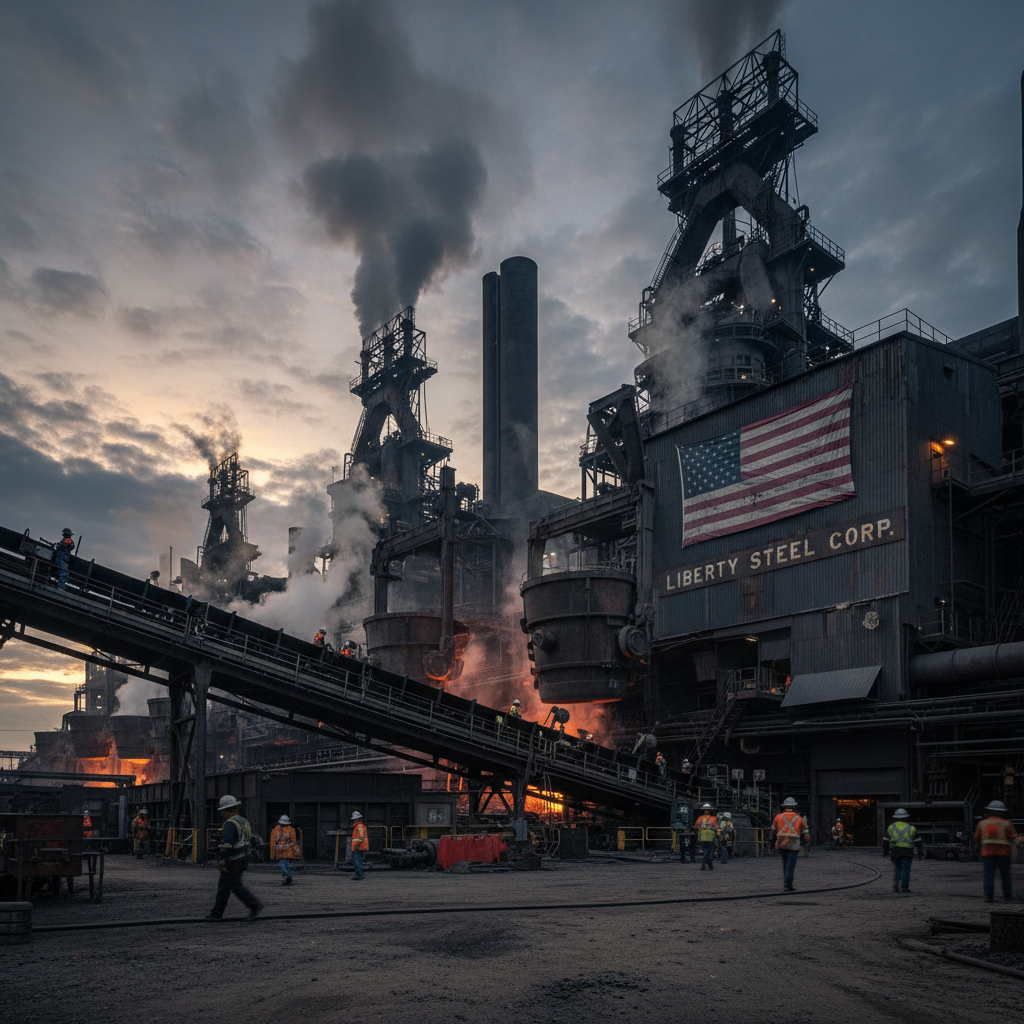
U.S. Steel's $475 Million Alabama Investment Fortifies Domestic Tubular Capacity
U.S. Steel approved a $475 million capital investment on June 24 to construct a state-of-the-art Quench and Tempering line at its Fairfield Tubular Operations in Alabama. Full production is targeted for the second quarter of 2029.
Quench and Tempering — a heat treatment process that dramatically increases the strength and hardness of steel — is a capability of direct strategic importance to the oil and gas sector, where high-performance tubular products are essential for drilling operations in demanding geological conditions. This investment is not incremental. It is a foundational expansion of domestic heat-treated steel manufacturing capacity.
For U.S. manufacturers and energy sector operators, the implications are concrete:
- Reduced import dependency for OCTG. Oil Country Tubular Goods have historically been subject to significant import exposure. The Fairfield expansion builds domestic production capability that directly reduces reliance on foreign-sourced heat-treated tubulars — a vulnerability that was exposed sharply during the supply disruptions of the early 2020s.
- Advanced manufacturing job creation. Quench and Tempering operations require skilled metallurgical and process engineering talent. The Fairfield facility represents high-value industrial employment in Alabama, with implications for regional workforce development and technical training pipelines.
- Timeline discipline required for procurement planning. With full production targeted for Q2 2029, procurement directors in the energy sector should initiate forward planning now. The three-year ramp means near-term sourcing strategies remain constrained, but the strategic window for locking in future domestic supply relationships opens immediately.
The Fairfield investment also reflects a broader thesis: the reindustrialization of U.S. manufacturing capacity in critical materials is accelerating, and companies that align procurement and capital planning with that trajectory will hold structural cost and supply advantages over those that do not. Read more
Alcoa's Gas Supply Agreement Exposes the Hidden Fragility in Global Aluminum Supply Chains
Alcoa executed an energy supply agreement on June 24 with Woodside Energy Group for 31.1 petajoules of natural gas, covering the period from 2027 to 2030. The gas will power Alcoa's alumina refineries in Western Australia.
This agreement deserves more attention than it typically receives in North American manufacturing circles. Here is why it matters beyond its immediate geography:
- Alumina is the upstream bottleneck for aluminum. Every downstream aluminum product — automotive sheet, aerospace structural components, packaging, construction extrusions — depends on a stable flow of alumina from refining operations. Energy instability at the refinery level propagates directly into aluminum price volatility and supply unpredictability for manufacturers months and quarters later.
- Energy contracting is now a supply chain discipline. Alcoa's decision to lock in a multi-year gas supply agreement three years in advance is a textbook example of upstream supply chain risk mitigation. For procurement directors managing aluminum input costs, understanding the energy exposure of your upstream suppliers is no longer optional analysis — it is a core component of commodity risk management.
- Western Australia's energy market is tightening. The agreement with Woodside signals that competition for reliable gas supply in the region is intensifying. Manufacturers dependent on Australian-sourced alumina should factor energy market conditions in Western Australia into their supplier risk assessments.
The Alcoa-Woodside transaction is a reminder that energy security and material supply security are inseparable at the refining tier. U.S. manufacturers who evaluate their aluminum suppliers purely on price and delivery terms — without examining the energy contracts underpinning those suppliers' operations — are carrying unquantified risk on their balance sheets. Read more
Editor's Take: The 90-Day Outlook for U.S. Manufacturing Leadership
This week's developments, taken together, articulate a thesis that Strata Intelligence has been tracking for 18 months: the United States is executing a multi-front industrial restructuring simultaneously across semiconductors, critical materials, advanced steel, and energy-linked raw material supply. The pace is accelerating.
For the next 90 days, here is what manufacturing leaders must prioritize:
1. Semiconductor sourcing strategy requires immediate reassessment. The onsemi-Synaptics merger will take time to close and integrate, but the strategic intent is clear today. Any manufacturer deploying AI-enabled automation, robotics, or embedded compute should initiate a supplier relationship review to understand where integrated smart platform offerings will emerge — and where current multi-vendor arrangements may become redundant or disadvantaged.
2. Memory and AI infrastructure inputs are entering a long-term supply constraint cycle. Micron's multi-year agreements are a market signal. Industrial buyers across sectors who treat memory, compute, and AI hardware as transactional purchases are structurally exposed. The companies executing long-term supply agreements now will hold cost and availability advantages through at least 2028.
3. Domestic steel capacity expansion is a procurement planning signal, not just an industry headline. The Fairfield facility's 2029 production target defines a planning horizon. Energy sector procurement teams have a three-year window to build supplier relationships before that capacity becomes available at scale. Act on that window before the market does.
4. Upstream energy risk in your materials supply chain demands new analytical rigor. The Alcoa-Woodside agreement illustrates a discipline that U.S. manufacturers have largely neglected: mapping the energy contracts of your upstream raw material suppliers. That analysis needs to become a standard component of supplier qualification and annual risk review processes — particularly for energy-intensive inputs like aluminum, glass, and specialty chemicals.
The industrial leaders who will define the competitive landscape through 2030 are not waiting for certainty. They are reading the signals, restructuring their sourcing and capital strategies, and moving with conviction. The week of June 26, 2026 provided four clear signals. The question is what your organization does with them.
Sources: ON Semiconductor Investor Relations · Micron Technology Investor Relations · U.S. Steel Newsroom · Rigzone — Alcoa-Woodside Coverage · U.S. Department of Commerce CHIPS Act

