
Strata Jobs: Solving the Manufacturing Talent Gap One Listing at a Time
Manufacturing is facing a workforce crisis that no amount of automation can fully absorb — and the platforms manufacturers use to hire haven't kept up. Strata Jobs changes that by putting a purpose-built job board inside the same ecosystem where manufacturers already run their operations.
The Problem Is Bigger Than an Open Requisition
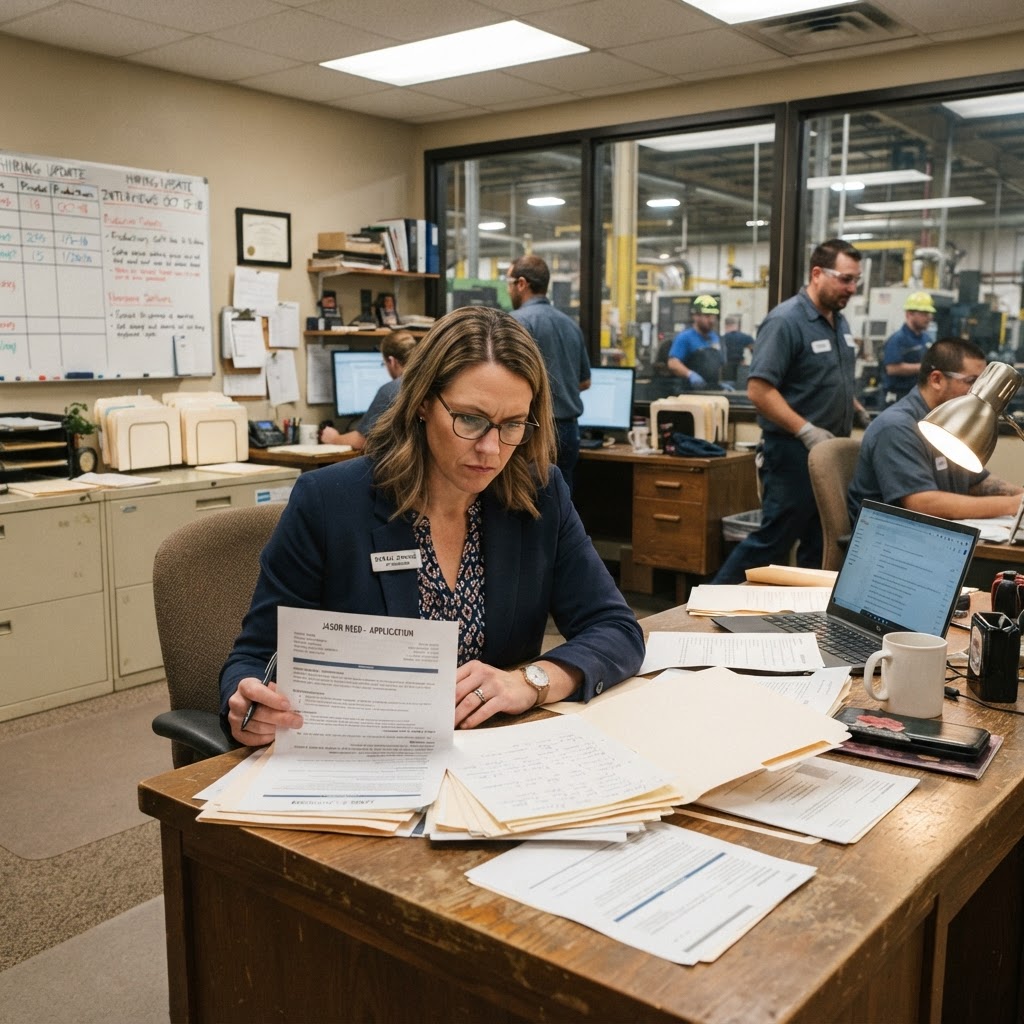
Picture this: a mid-sized precision machining shop in Ohio just landed a new contract. Lead times are tight, the floor is already stretched, and the operations manager needs two CNC machinists and a quality control lead — yesterday. She posts on a general job board, gets flooded with irrelevant applicants, and spends two weeks filtering through resumes from candidates who have never seen a lathe. The contract timeline slips. The customer notices.
This is not an edge case. According to the Manufacturing Institute, the U.S. manufacturing sector could face a shortage of 2.1 million workers by 2030 if current trends hold. The hiring gap is structural, and it's being made worse by tools that weren't built for this industry. Generic platforms like Indeed or LinkedIn serve every industry equally — which means they serve manufacturing poorly.
The talent pipeline problem isn't just about volume. It's about match quality, industry fluency, and speed. Manufacturers need a hiring channel that speaks their language from the first click.
"The hiring gap in manufacturing isn't just a numbers problem — it's a context problem. The wrong platform wastes time manufacturers don't have."
Why It Matters
The Bureau of Labor Statistics consistently ranks manufacturing among the sectors with the highest number of unfilled job openings relative to available workforce. That's not a pipeline issue alone — it's a signal that the discovery and matching infrastructure for manufacturing talent is broken.
Here's what that costs manufacturers in real terms:
- Delayed production starts when specialized roles stay open past onboarding windows
- Overtime overload on existing staff, accelerating burnout and turnover
- Contract penalties when headcount shortfalls affect delivery commitments
- Reduced capacity bids because operators can't staff up fast enough to pursue new business
Strata Jobs was built to address exactly this. By embedding a job board inside Strata Ultra — a platform already populated by manufacturing executives, plant managers, and operations professionals — it creates a direct line between open roles and the people most likely to fill them well.
How It Works
Strata Jobs is integrated directly into the Strata Ultra platform at strataUltra.app, which means it operates inside the same environment as tools like Manufacturing GPT, Stratacom, and the Manufacturing Exchange. That integration is the point — your job listings live where manufacturing professionals already are.

What will it take to turn demand into delivered output?
Explore The Capacity Imperative, our report on U.S. advanced manufacturing and the priorities shaping 2027.
Here's how the workflow runs:
- Post a role — Manufacturers create listings with industry-specific fields: machine type, certifications required (e.g., AWS welding certifications, NIMS credentials), shift structure, plant location, and compensation range.
- Reach a qualified audience — Listings are visible to Strata Ultra's professional network, which skews heavily toward people already working in or adjacent to manufacturing.
- Receive and manage applications — The built-in application system keeps everything inside the platform. No third-party redirect, no inbox chaos.
- Connect via Stratacom — Once a candidate looks promising, manufacturers can move directly into Stratacom, Strata Ultra's in-platform messaging tool, to open a conversation without leaving the ecosystem.
- Leverage platform context — Because Strata Ultra also houses the Manufacturing Exchange — a verified directory of manufacturers and their capabilities — there's inherent credibility on both sides of the transaction. Candidates know who they're applying to. Manufacturers know the platform's users aren't random.
The entire loop from posting to first conversation can happen inside a single session.
Who It's For
Strata Jobs is designed for manufacturers who are serious about solving workforce problems at the operational level — not HR teams chasing vanity metrics on applicant volume.
Best fit use cases include:
- Small and mid-sized manufacturers who can't afford a dedicated recruiting firm and need a cost-effective, high-context channel
- Contract manufacturers scaling up for new programs and needing to move fast on skilled trades
- OEM facility managers filling specialized roles — robotics technicians, process engineers, EHS coordinators — where general boards return weak candidate pools
- Workforce development programs connected to manufacturers, such as those operating under Department of Labor apprenticeship frameworks, who want to place graduates with verified manufacturers
- Multi-site operations standardizing their hiring pipeline across plants through one centralized platform
If your operation is tied into the broader Strata Ultra ecosystem — running scenarios in the Scenario Planner, tracking policy shifts in Government Insights, or sourcing partners through the Manufacturing Exchange — adding Strata Jobs to your workflow is a natural extension, not a new tool to learn.
Start Hiring Where Manufacturing Actually Lives
The talent gap in American manufacturing is real, documented, and getting worse. But the answer isn't to keep posting on platforms built for software developers and retail managers. It's to hire where your industry operates.
Strata Jobs is live now on strataUltra.app. Post your first role, browse active candidates, and see what it looks like when the hiring tool actually understands your floor.
Sources: Manufacturing Institute Workforce Report · Bureau of Labor Statistics Job Openings Data · Department of Labor Apprenticeship Programs · National Institute for Metalworking Skills · American Welding Society Certification

