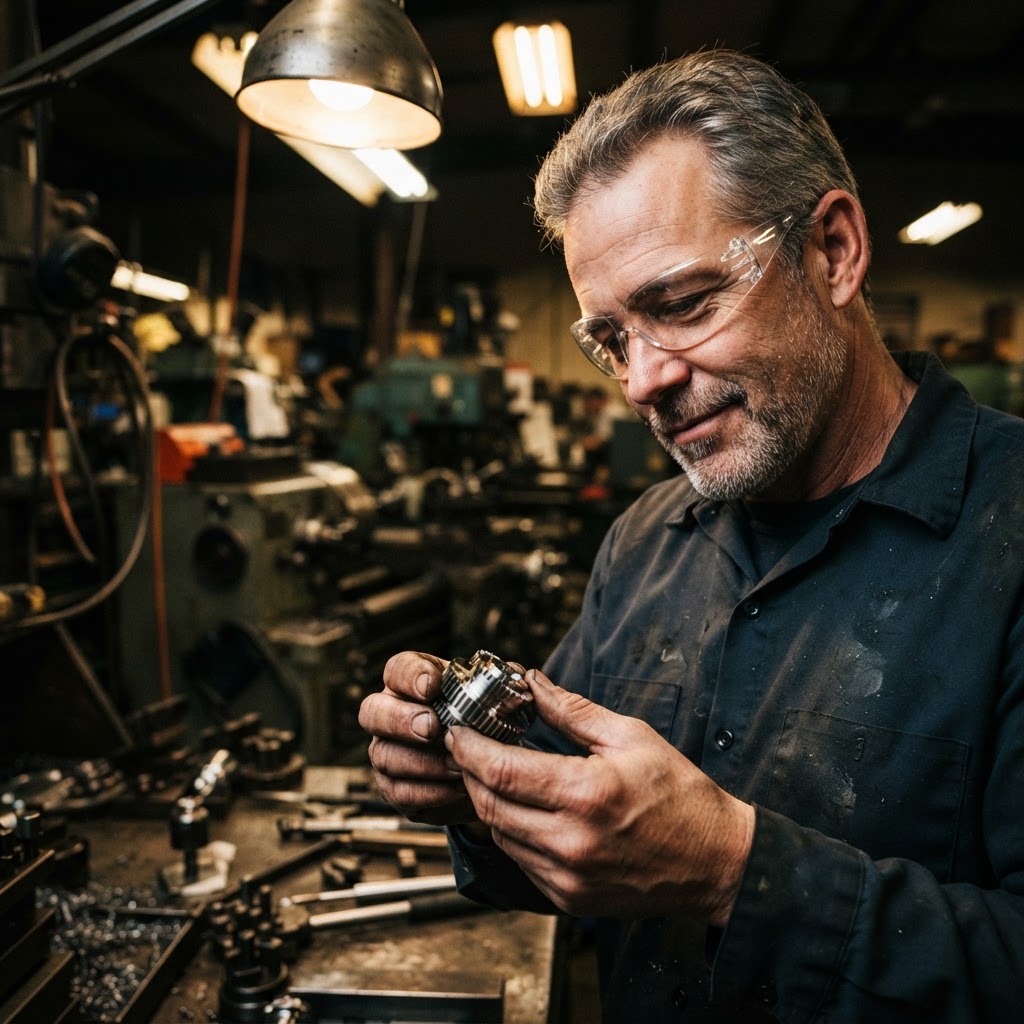

Why Your Best Machinist Might Quit Next Year — and How to Stop It
Your most skilled operator is already listening to recruiters. Retention isn't an HR problem — it's a production floor crisis.
What's Actually Driving Skilled Trades Out the Door?
It's not just money. It's disrespect disguised as process.
Experienced machinists are watching shops automate around them — without involving them. They feel like obstacles, not assets. That disconnect is lethal to retention.
The Manufacturing Institute has tracked this for years. Skilled trades workers increasingly cite lack of career advancement as their top exit reason. Not pay. Advancement.
Shops that ignore this are burning institutional knowledge every time someone clocks out for the last time.
Are You Actually Investing in Your People — or Just Their Output?
There's a difference. Output investment means new tooling, faster CNCs, tighter tolerances. People investment means something harder.
It means structured career ladders. It means letting your best machinist train the next one — with recognition and compensation attached.
"If your most experienced operator has nowhere to grow, they'll grow somewhere else."
Tooling U-SME offers workforce development programs built specifically for manufacturers. Shops using structured learning paths see measurably better retention. That's not opinion — that's their published outcome data.
Start there. Build a visible path from operator to lead to trainer to process engineer.
Why Is Automation Making the Problem Worse?
Counterintuitive but true. Bad automation rollouts alienate your veterans.
When shops deploy FANUC robotics or Mazak CNC systems without upskilling the floor, experienced workers feel bypassed. They didn't spend 15 years building expertise to watch a cobot do their job without their input.

What will it take to turn demand into delivered output?
Explore The Capacity Imperative, our report on U.S. advanced manufacturing and the priorities shaping 2027.
The fix is involving them early. Make your veteran machinist the internal champion for new technology. Give them ownership of the transition.
That's not soft management. That's smart operations.
What Can You Do Starting This Quarter?
Stop waiting for an exit interview to tell you what's wrong. Act now with these concrete moves:
- Conduct stay interviews — Ask your top performers what would make them stay. Do it before they have one foot out the door.
- Create a skills matrix — Map what your best people know. Then build training programs that transfer that knowledge formally.
- Tie mentorship to compensation — If a machinist trains three junior operators, reward that. Lincoln Electric has built workforce development culture into its DNA. Study that model.
- Explore federal support — The Department of Labor's ApprenticeshipUSA program offers funding for registered apprenticeship structures. Free money to formalize what you should already be doing.
- Benchmark against industry leaders — The Association for Manufacturing Excellence (AME) publishes best practices on workforce engagement. Use them.
None of this requires a massive budget. It requires attention.
So What Happens If You Do Nothing?
You already know the answer. The talent walks. Productivity drops. Quality suffers. You spend more on recruiting than you ever would have on retention.
The skilled trades shortage is structural and worsening. The Bureau of Labor Statistics projects continued demand for machinists and tool-and-die makers through the decade. Supply isn't catching up.
Every veteran machinist you lose is a compounding cost. Training replacements takes years, not weeks.
The shop that keeps its best people will outcompete the shop that keeps buying new ones.
Sources: Manufacturing Institute · Tooling U-SME · ApprenticeshipUSA — Department of Labor · Bureau of Labor Statistics — Machinists Outlook · Association for Manufacturing Excellence

