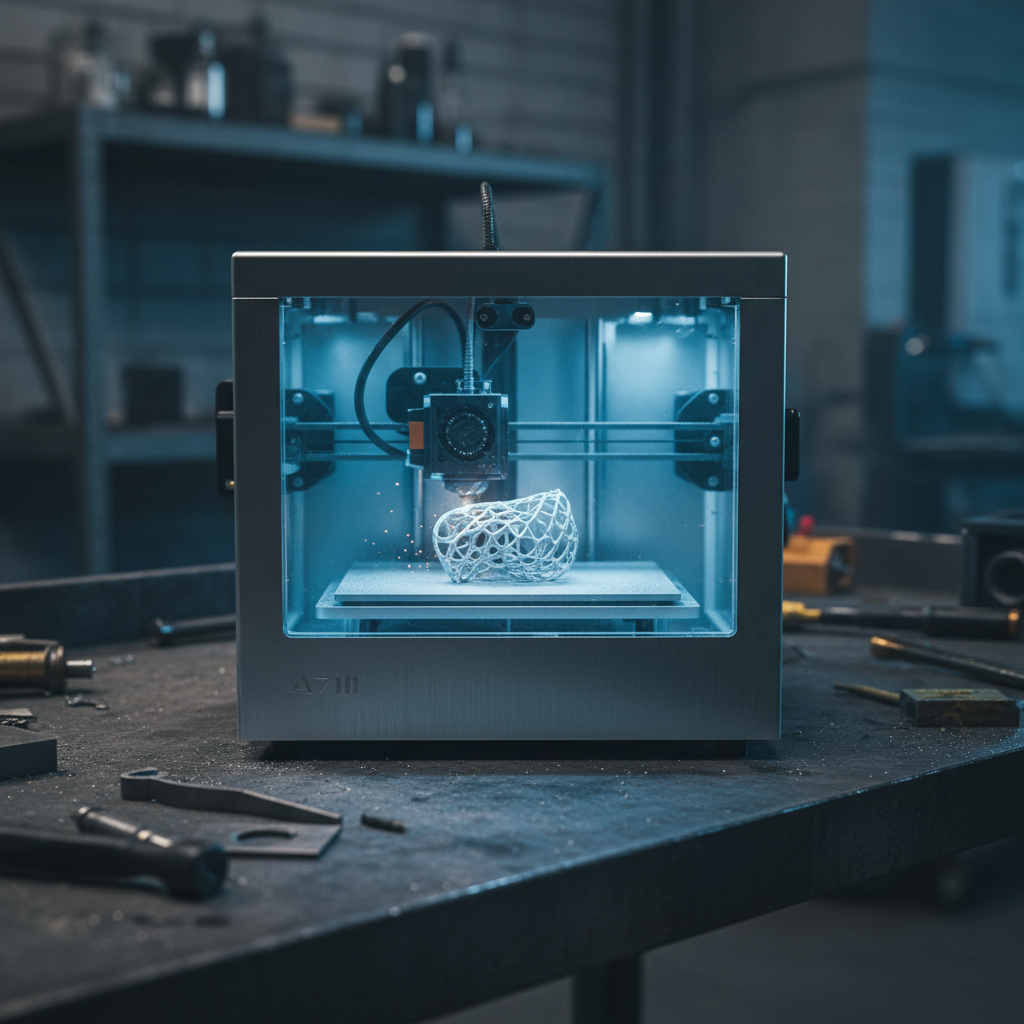

3D Printing Just Made Your Old Inventory Strategy Obsolete
Your warehouse full of spare parts is quietly becoming a liability.
That's not a threat. It's a forecast. The shift is already happening - and most manufacturers are still planning like it's 2005.
What's Actually Changing Right Now?
Additive manufacturing has crossed a threshold. It's not just for prototypes anymore. Production-grade parts are rolling off industrial printers daily. Lead times that used to stretch weeks now shrink to hours.
This changes everything about how you stock, store, and source.
Traditional inventory strategy is built on one assumption: parts take time to get. Buffer stock exists because of that gap. 3D printing is collapsing that gap fast.
So Why Are You Still Hoarding Parts?
Old habits. Legacy contracts. Risk aversion. Pick your reason.
Most ops teams still treat additive manufacturing as a niche tool. Something for R&D. A cool demo at a trade show.
That framing is costing you money right now. On-demand part production isn't experimental - it's operational at manufacturers across aerospace, automotive, and industrial equipment sectors.
"The warehouse of the future isn't full of parts. It's full of files."
That mental shift is the whole game. A digital parts library replaces physical shelf space. A print-on-demand workflow replaces safety stock calculations.
Simpler. Faster. Dramatically cheaper to maintain.
Doesn't This Create Quality Risks?
Fair question. It deserves a direct answer.
Yes - if you implement it carelessly. No - if you build the right validation workflows. The manufacturers winning here aren't skipping quality control. They're redesigning it for digital-first production.

What will it take to turn demand into delivered output?
Explore The Capacity Imperative, our report on U.S. advanced manufacturing and the priorities shaping 2027.
Material science in additive manufacturing has advanced significantly. Certified metal and polymer parts now meet aerospace and medical standards. The technology isn't the bottleneck anymore. Your internal processes might be.
What Does a Smarter Inventory Model Actually Look Like?
Think in tiers. Not every part belongs in a print-on-demand workflow.
High-volume, standardized components? Still source traditionally. Low-volume, legacy, or emergency parts? That's your 3D printing sweet spot. The ROI case builds fast when you map where you're currently overstocking.
Some manufacturers are already killing entire SKU categories from physical inventory. They've converted those parts to certified digital files. Obsolescence risk drops. Carrying costs drop. Response time to line-down events? Way down.
This isn't theoretical. It's a competitive edge that's compounding right now.
So Why Is Nobody Talking About This Loudly Enough?
Because change is uncomfortable. Because procurement teams have existing supplier relationships. Because nobody wants to be first to blow up a system that technically works.
But "technically works" isn't the bar anymore. Your competitors aren't waiting for a consensus. They're filing digital parts libraries while you're cutting POs for shelf stock.
The manufacturers who move early on this won't just save on inventory costs. They'll gain speed advantages that are nearly impossible to replicate once locked in.
That's the real story here. This isn't just about parts. It's about who controls production velocity in the next decade.
The future of inventory isn't stored on shelves - it's stored in servers, and the clock on your old strategy is already running out.

