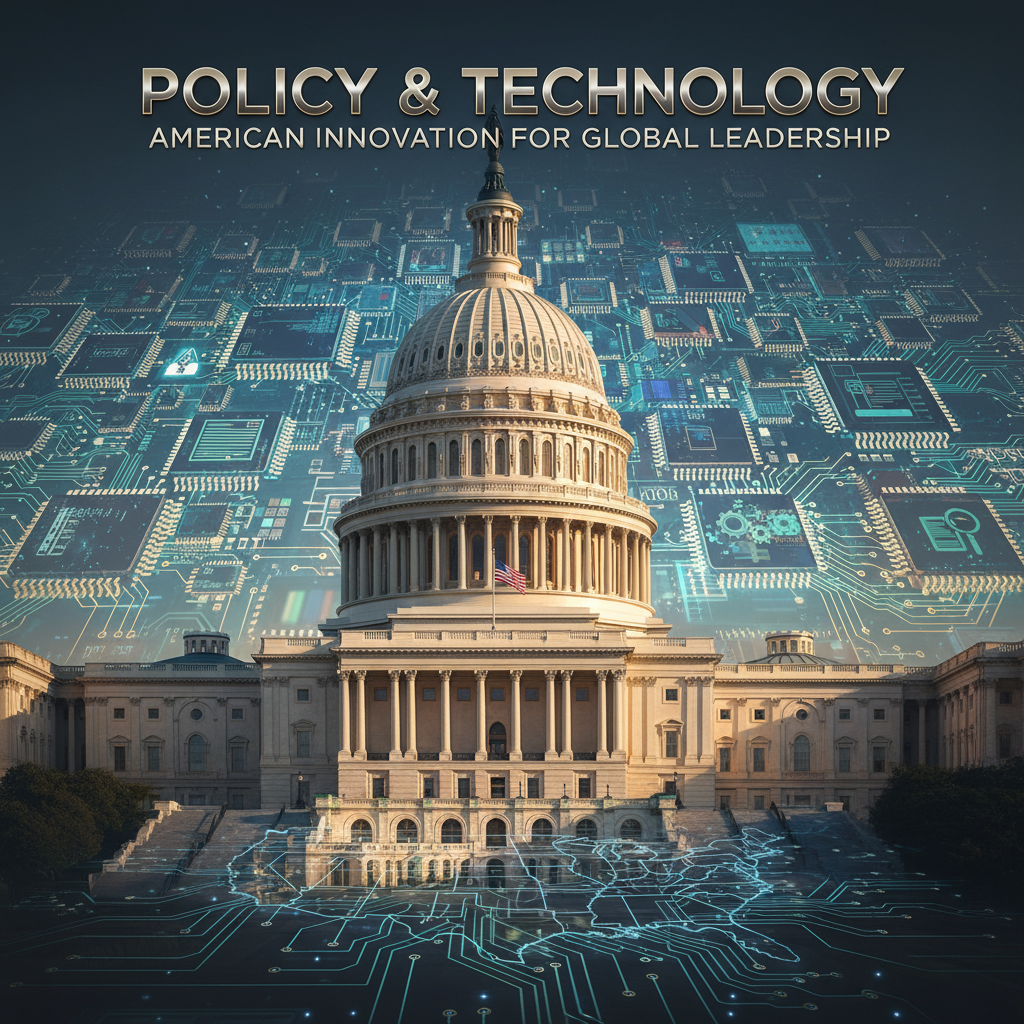

Inside the CHIPS Act: Where the Money Is Going and Who Benefits
By Marcus D. Holloway, Editor in Chief - Strata Intelligence
When Intel broke ground on its $20 billion fab complex outside Columbus, Ohio, the images circulated like propaganda - hard hats, handshakes, and the kind of optimism that American manufacturing hasn't generated in decades. But for every executive watching that ceremony from a corner office, there was a plant manager somewhere asking a more practical question: where, exactly, does the money go - and is any of it coming to me?
The CHIPS and Science Act, signed into law in August 2022, authorized roughly $52 billion in federal spending directed at domestic semiconductor manufacturing, research, and workforce development. It is the most significant industrial policy investment the United States federal government has made in a generation. And yet, two-plus years into implementation, much of the manufacturing sector still operates with a fragmented understanding of how the funding is structured, who qualifies, and what strategic posture actually positions a company to benefit.
This analysis is for the operators. Not the lobbyists. Not the venture capitalists who got to the table early. The directors, plant managers, and manufacturing executives who need to understand the structural mechanics of this program before the most consequential funding windows close.
1. The Four Funding Pillars You Must Understand
The CHIPS Act is not a single grant program. It is a portfolio of distinct funding mechanisms, each with its own eligibility criteria, competitive structure, and strategic intent. Conflating them is the first mistake most operators make.
Pillar One: CHIPS for America Fund ($39 billion) This is the headline number - the manufacturing incentives pool administered by the Department of Commerce. It is divided into separate tracks targeting leading-edge logic fabs, mature-node and specialty chip production, and advanced packaging and assembly. TSMC's Arizona fabs, Samsung's Texas expansion, and Intel's Ohio and Arizona investments have all been announced within this framework. These are not small-business programs. They are designed to attract or retain hyperscale semiconductor manufacturers on American soil.
Pillar Two: CHIPS for America Defense Fund ($2 billion) Administered through the Department of Defense, this pillar targets secure, domestic supply of chips for national security applications - sensors, radar, communications, and defense-grade microelectronics. The customers here are defense primes and the suppliers embedded in their chains. If your facility touches DoD work or has the potential to be certified for it, this lane deserves serious attention.
Pillar Three: CHIPS for America International Technology Security and Innovation Fund ($500 million) This is the diplomatic arm of the legislation - funding aimed at coordinating allied semiconductor supply chains and technology standards. For most manufacturers, this is background noise. For companies with international operations or partnerships across Taiwan, Japan, South Korea, or the Netherlands, it is a signal about where Washington wants the global supply chain to land.
Pillar Four: CHIPS for America Workforce and Education Fund ($200 million) Do not underestimate this pillar because of its relative size. The workforce component funds community college programs, registered apprenticeships, and technical training pipelines explicitly designed to build the labor pool that new fabs will need. Plant managers hiring process technicians, equipment operators, and manufacturing engineers should be engaging with the regional workforce initiatives spawned by this fund - because those programs are already beginning to shift where talent flows.
2. The Tier Structure: Who Actually Gets Funded
Beyond the four pillars, Commerce has organized CHIPS manufacturing incentives into a tiered competitive structure. Understanding the tiers is critical to calibrating your company's realistic positioning.
-
Tier 1 - Leading-Edge Logic: Sub-10nm process nodes. This is TSMC, Intel, Samsung territory. Capital requirements run into the tens of billions. Federal incentives here are substantial but so are the compliance, guardrail, and reporting obligations - including restrictions on expanding production capacity in countries of concern (specifically China) for a decade.
-
Tier 2 - Mature-Node and Specialty Chips: This is the tier with the broadest implications for mid-market manufacturers. It covers chips for automotive, industrial controls, medical devices, aerospace, and defense - applications that don't require bleeding-edge nodes but do require domestic, reliable supply. GlobalFoundries, Microchip Technology, and a range of specialty foundries are competing in this space. For manufacturers who consume these chips in their products, understanding which domestic suppliers are receiving CHIPS support directly affects your sourcing strategy.
-
Tier 3 - Advanced Packaging, Assembly, and Test: This tier is arguably the most underappreciated opportunity in the entire legislation. The United States historically offshored not just wafer fabrication but the downstream packaging and test operations that turn raw silicon into deployable components. CHIPS funding is now explicitly targeting the rebuilding of domestic capacity in this segment. Companies with precision manufacturing capabilities, cleanroom experience, or high-mix assembly expertise should be evaluating whether they can compete for this work.

What will it take to turn demand into delivered output?
Explore The Capacity Imperative, our report on U.S. advanced manufacturing and the priorities shaping 2027.
3. The Guardrails That Will Shape Your Competitive Environment
The CHIPS Act is not unconditional capital. It comes with structural constraints that will reshape competitive dynamics across the industry - and every manufacturing executive needs to model these consequences.
The China Guardrail: Recipients of CHIPS manufacturing incentives are prohibited from materially expanding semiconductor manufacturing capacity in China for ten years. For global manufacturers with mixed footprints, this is not an abstraction - it is a forced strategic choice. Companies that accept CHIPS funding are effectively declaring which side of the decoupling they are on. Expect this to accelerate supplier bifurcation across the semiconductor supply chain.
The Profit-Sharing Provision: Large-grant recipients are required to share a portion of any excess profits with the federal government during the incentive period. This is a novel mechanism in American industrial policy, and its practical effect on investment calculus for potential applicants is still being understood. For operations leaders, the downstream implication is that major fab projects may carry more conservative margin targets during their ramp phases than a purely private investment would.
The Workforce and Community Investment Requirements: Applicants for significant CHIPS funding must demonstrate meaningful investment in workforce development and community partnerships. This is not box-checking - Commerce has made clear it views human capital infrastructure as integral to the program's long-term success. Plants located near potential CHIPS fab projects should already be thinking about the labor market pressure this will create.
4. The Second-Order Effects That Matter Most to Operators
For the majority of manufacturers reading this analysis, CHIPS Act funding will not arrive as a direct check. It will arrive as a restructured competitive landscape, a shifted supply chain, and a new labor market reality. These second-order effects deserve the same strategic attention as the primary funding streams.
Supply Chain Reshoring: New domestic fabs require domestic supply chains. The inputs to semiconductor manufacturing - ultra-pure chemicals, specialty gases, precision tooling, advanced materials, environmental systems, and facility construction - represent an enormous procurement base that is already being redirected toward American suppliers. Companies with relevant capabilities should be in active conversations with fab developers now, not when the construction crews arrive.
Equipment and Maintenance Demand: Semiconductor fabs are among the most equipment-intensive manufacturing environments in existence. The expansion of domestic fab capacity will create sustained demand for precision maintenance, calibration, retrofitting, and equipment lifecycle services. Contract manufacturers and industrial service companies with cleanroom or high-precision experience are sitting on an opportunity that extends well beyond the initial construction phase.
Regional Labor Market Pressure: Columbus, Phoenix, Albany, and the Research Triangle are the primary geographic nodes of CHIPS-driven development. Each new fab requires thousands of skilled technicians and operators during both construction and operations phases. Manufacturers already operating in these regions should expect intensified competition for technical talent - and should be building workforce strategies accordingly, including direct engagement with the community college programs receiving CHIPS workforce funding.
Customer Industry Disruption: If you manufacture products that embed semiconductors - automotive components, industrial controls, medical devices, defense systems - the restructuring of the domestic chip supply chain will change your sourcing options, your lead times, and eventually your cost structures. The era of purely offshore-dependent chip supply is being deliberately dismantled. Companies that proactively build relationships with domestic foundries emerging under CHIPS support will have preferential access during allocation-constrained periods, which history shows occur with painful regularity.
5. A Framework for Positioning Your Organization
Given the complexity of the CHIPS landscape, operations leaders need a disciplined framework for determining where to invest attention and resources.
-
Map your semiconductor exposure. Identify every component in your bill of materials that contains or depends on semiconductor devices. Understand which nodes they require and which geographies currently produce them. This is your vulnerability map.
-
Audit your supply chain adjacency. Do you supply materials, services, components, or capabilities that new domestic fabs will require? Be rigorous about this - the indirect supply chain of a semiconductor fab is vast and includes categories most manufacturers wouldn't immediately recognize.
-
Engage your regional workforce ecosystem. Identify which community colleges, technical schools, and workforce boards in your operating region are receiving or pursuing CHIPS workforce funding. Build relationships before the competition for graduates intensifies.
-
Monitor Commerce Department award announcements. The CHIPS Program Office publishes applicant updates and award announcements that give visibility into which regions and which supply chain segments are receiving investment. This intelligence is free and should inform your site strategy, hiring plans, and customer development.
-
Evaluate your DoD program eligibility. If your manufacturing capabilities have any overlap with defense-grade electronics, materials, or precision components, a serious assessment of the CHIPS Defense Fund and related DoD programs is warranted.
Conclusion
The CHIPS Act is not a technology story, despite how the press has covered it. It is an industrial policy story - a deliberate attempt by the federal government to use capital allocation, trade restrictions, and workforce investment to reconstruct a domestic manufacturing capability that took forty years to erode. The companies that benefit most will not necessarily be the ones that receive direct grants. They will be the ones that read the structural logic of the program accurately, positioned themselves in the right supply chain relationships before the demand materialized, and built the workforce pipelines that every new fab will eventually need to fill. The window for that positioning is not indefinitely open. The concrete is already being poured.
Strata Intelligence covers American manufacturing with the depth and precision the industry deserves. Subscribe for weekly analysis delivered to senior operations and executive leadership.

