
How Federal Grants Are Reshaping Community Manufacturing Ecosystems
Category: Government | Report | Strata Intelligence
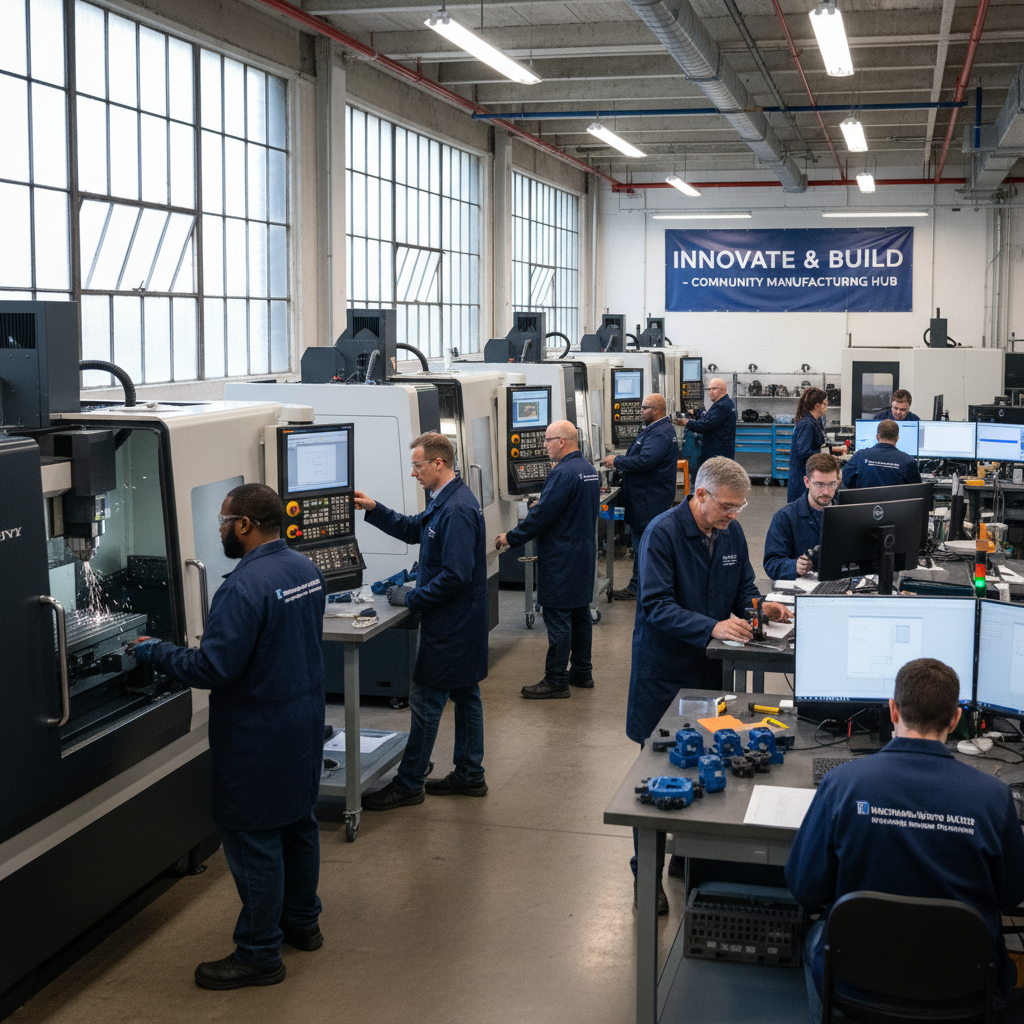
In Youngstown, Ohio, a city that spent decades serving as a cautionary tale about deindustrialization, something has quietly reversed. Regional manufacturers, community colleges, and municipal planners have coalesced around federally funded programs to rebuild not just factory floors, but entire supply chain relationships that were once considered permanently severed. Youngstown is not an anomaly. It is a signal.
Across the American industrial heartland - and increasingly in coastal and Southern corridors long overlooked in manufacturing policy conversations - federal grant programs are doing something more structurally significant than funding individual capital projects. They are rebuilding the connective tissue between manufacturers, workforce pipelines, and regional economic infrastructure. For operations directors and plant managers navigating decisions about facility investment, workforce development, and supply chain resilience, understanding this shift is no longer optional background knowledge. It is competitive intelligence.
The Architecture of Modern Federal Manufacturing Investment
The federal government's approach to manufacturing support has undergone a fundamental redesign over the past several years. The older model - project-specific grants administered through fragmented agency silos - has given way to a more ecosystem-oriented framework. Three legislative pillars now define the landscape:
- The CHIPS and Science Act - Targeting semiconductor manufacturing and advanced materials, with provisions that extend well beyond chip fabrication to include the supplier networks and workforce ecosystems those facilities require.
- The Inflation Reduction Act (IRA) - Channeling investment into clean energy manufacturing, battery production, and grid infrastructure, creating pull-through demand for precision metalworking, specialty plastics, and embedded electronics manufacturing.
- The Bipartisan Infrastructure Law - Funding domestic production of construction materials, industrial equipment, and the logistics infrastructure manufacturers depend on to move goods efficiently.
What makes this architecture meaningfully different from prior federal manufacturing initiatives is the explicit emphasis on regional clustering. Grant structures under these programs reward applicants who demonstrate cross-institutional coordination - a manufacturer partnering with a community college, a regional economic development authority, and a tier-two supplier in the same grant application receives favorable consideration over a standalone facility request. This is deliberate policy design, not administrative preference.
Framework: How Ecosystem Grants Actually Flow to the Floor
For manufacturing executives evaluating whether federal funding is operationally relevant to their facilities, the mechanism matters as much as the money. Here is a structured view of how these dollars move:
1. Anchor Institution Awards Large-scale grants - often administered through the Department of Energy, Department of Commerce, or the Economic Development Administration (EDA) - flow first to anchor institutions: major manufacturers, research universities, or regional economic development consortia. Companies like Dow, Nucor, and Siemens Energy have positioned themselves as anchors in specific regions, receiving primary awards that then create downstream expectations for supplier engagement.
2. Supply Chain Integration Requirements Many anchor awards now carry domestic content provisions and supply chain development mandates. A recipient building a new facility may be required to demonstrate that a percentage of components will be sourced domestically, creating immediate and traceable demand for regional suppliers. For mid-size manufacturers operating in relevant categories - precision components, specialty coatings, industrial controls - this is a direct market access opportunity, not an abstract policy benefit.
3. Workforce Development Co-Investment The Manufacturing USA network - a system of federally funded manufacturing innovation institutes including organizations like IACMI, LIFT, and America Makes - operates as a parallel channel, connecting manufacturers with workforce training resources that are partially grant-funded. Manufacturers who engage with these institutes gain access to co-developed training programs, shared equipment, and collaborative R&D that would be cost-prohibitive to pursue independently.
4. State-Level Matching and Amplification Federal grants increasingly require or incentivize state matching funds, which means the most active manufacturing states - Michigan, Texas, Ohio, Tennessee, South Carolina - are effectively doubling down on federal investment with their own economic development resources. For manufacturers selecting expansion sites, the presence of this stacked funding environment is a material factor in site selection economics.

What will it take to turn demand into delivered output?
Explore The Capacity Imperative, our report on U.S. advanced manufacturing and the priorities shaping 2027.
What Is Actually Being Built: Three Patterns Worth Watching
Beyond the funding mechanics, three tangible patterns are emerging on the ground that carry direct operational implications for manufacturing leaders.
Pattern One: The Workforce Pipeline as Infrastructure
The persistent skilled labor shortage has forced federal grant designers to treat workforce development not as a supplementary line item, but as core infrastructure investment. Programs like the Department of Labor's Good Jobs Initiative and sector-specific workforce grants tied to IRA clean energy provisions are funding apprenticeship expansion, community college equipment upgrades, and industry-credential alignment at a scale not seen since post-WWII industrial policy.
For plant managers, the practical implication is this: manufacturers who establish formal relationships with regional workforce programs - even at modest initial commitment levels - are positioning themselves to access a labor pipeline that will become increasingly differentiated from open-market hiring. Companies in the Southeast that partnered early with state-aligned workforce boards, such as those operating under Georgia's Quick Start program or South Carolina's readySC, have demonstrated measurably shorter ramp-up times for new production lines. The grant-funded equivalent of these programs is expanding nationally.
Pattern Two: The Resurgence of Industrial Commons
One of the more structurally interesting outcomes of ecosystem-oriented grants is the reemergence of shared industrial infrastructure - what economists sometimes call the "industrial commons." These are regional concentrations of specialized suppliers, technical knowledge, and process expertise that make it economically rational for manufacturers to locate and expand in a specific geography.
Federal grants are consciously reconstructing these commons in places where they atrophied. The establishment of battery manufacturing corridors in the Midwest, driven by investments from companies like Ford, GM, and their joint venture partners, is not just about those anchor facilities. It is generating demand for electrolyte suppliers, separator manufacturers, battery management system producers, and specialized testing equipment providers - many of which are small and mid-size manufacturers receiving direct EDA or SBA grant support to scale.
For operations directors evaluating whether to invest in capabilities adjacent to these corridors, the timeline question is critical. Industrial commons tend to consolidate supplier networks rapidly once critical mass is achieved. Early positioning carries disproportionate advantages.
Pattern Three: Rural and Secondary-Market Industrial Investment
A deliberate feature of current federal grant policy is the geographic equity mandate embedded in multiple programs. The EDA's Good Jobs Challenge, the USDA's rural development manufacturing programs, and specific IRA provisions targeting energy communities - defined largely as former coal and fossil fuel-dependent counties - are directing capital into markets that institutional manufacturing investment had largely bypassed for two decades.
This is not charity economics. Labor availability, real estate costs, and state incentive packages in these markets often compare favorably with saturated industrial corridors. Manufacturers willing to engage with the complexity of rural or secondary-market operations - supply chain logistics, workforce commute challenges, infrastructure gaps - are finding that grant stacking in these geographies can substantially alter project economics.
The Accountability Dimension: What Executives Need to Understand
Federal grants are not free money, and the compliance infrastructure they require deserves candid discussion. Davis-Bacon Act wage requirements, domestic content verification, environmental review timelines, and mandatory reporting frameworks add administrative load that smaller manufacturers consistently underestimate during the application phase.
The operational leaders best positioned to capture grant value are those who:
- Engage grant consultants or legal counsel before application, not after award - the structural commitments embedded in grant terms shape facility design, hiring practices, and procurement policies for years
- Build consortium relationships proactively - manufacturers who arrive at grant opportunities as isolated applicants are consistently at a disadvantage against coordinated regional coalitions
- Treat compliance infrastructure as a long-term asset - the reporting systems and documentation practices required for federal grants create operational data discipline that has independent value beyond the grant relationship
- Coordinate with state economic development agencies early - state agencies often have advance knowledge of federal grant cycles and can facilitate applications that arrive with stronger regional context
The manufacturers who have navigated this environment most successfully - among them regional precision manufacturers in Ohio's Third Frontier ecosystem and advanced composites producers in Tennessee's Innovation Valley - share a common characteristic: they treated federal grant engagement as a strategic function, not an administrative task.
The Longer View
The manufacturing executive who dismisses federal grant programs as bureaucratic distraction, relevant only to nonprofits and economic development consultants, is operating on a map that no longer reflects the terrain. The current federal investment posture in manufacturing is the most significant since the Cold War-era defense industrial buildup, and its effects on regional supply chains, workforce availability, and competitive facility economics will compound over the next decade.
The question is not whether these programs will reshape community manufacturing ecosystems - that process is already underway, visibly, in Youngstown and Battle Creek and Spartanburg and dozens of other communities where the industrial commons is being deliberately reconstructed. The question is which manufacturers will have positioned themselves within those ecosystems before the consolidation occurs, and which will arrive later to find that the advantageous relationships, the preferred supplier arrangements, and the workforce pipeline access have already been claimed by competitors who read the signal earlier.

