
Collaborative Robots and the End of the Safety Cage Era
The orange safety cage was, for decades, the universal symbol of industrial robotics - a hard boundary between machine speed and human flesh. Walk any legacy auto plant or tier-one supplier facility built before 2015, and you'll still find them: heavy welded steel, warning signage, interlocked gates that kill power the moment a worker crosses the threshold. They were never elegant. They were necessary.
They're becoming obsolete.
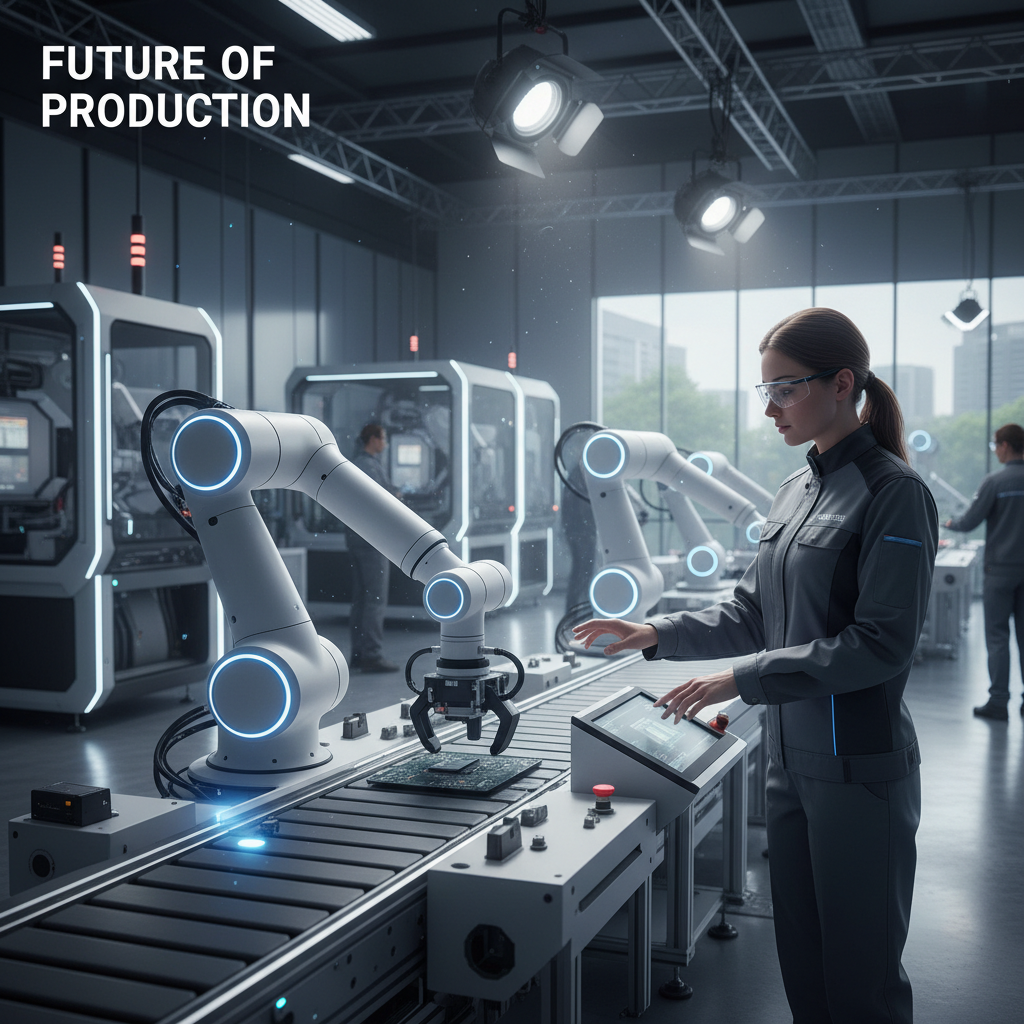
Collaborative robots - cobots - have quietly dismantled the foundational assumption that industrial automation requires physical separation from human workers. And the shift isn't cosmetic. It's architectural. It's changing how plants are designed, how workflows are sequenced, and how manufacturers think about scaling automation without the capital expenditure of dedicated robotic cells.
Why the Cage Made Sense - Until It Didn't
Traditional industrial robots are fast, powerful, and completely indifferent to what's in their path. A FANUC or KUKA arm running a weld cycle doesn't sense a technician reaching in to clear a jam. It executes its program. The cage existed because the robot couldn't be trusted to stop - and stopping it meant losing cycle time.
The economics reinforced the architecture. Dedicated robotic cells with hard guarding made sense when you were running high-volume, low-mix production. Ford stamping a million identical parts. A Tier 1 supplier running the same bracket for a ten-year model program. You built the cell once, amortized it over years, and the cage cost was trivial relative to throughput.
But American manufacturing has moved. The rise of high-mix, low-volume production - driven by shortening product cycles, nearshoring complexity, and customer demand for configuration - broke the economic logic of the dedicated robotic cell. Retooling a caged cell for a new part family is expensive, slow, and disruptive. Flexibility became the premium capability.
Cobots were built for exactly that environment.
What Actually Changed in the Technology
The cobot revolution wasn't just a marketing reframe. Three genuine engineering advances made cage-free operation viable:
- Force-torque sensing and power-and-force limiting (PFL): Cobots from Universal Robots, FANUC's CR series, and ABB's GoFa line are designed to detect abnormal contact force and stop - or retract - before injury thresholds are reached. ISO/TS 15066 defines the technical limits, and modern cobots are built to comply with them by default.
-
Vision and spatial awareness: Integration with 3D vision systems and LiDAR-based safety scanning means cobots increasingly know where humans are before contact occurs. They're not just reactive - they're anticipatory, slowing or rerouting as a worker enters a defined proximity zone.
-
Risk assessment frameworks replacing guarding mandates: OSHA and the Robotic Industries Association (now A3) have shifted the compliance conversation from prescriptive guarding requirements toward risk assessment-based approaches. If your risk assessment documents that a specific cobot application at a specific speed and payload poses acceptable risk, the cage is optional - not the default.
This regulatory evolution is as important as the hardware. It gave plant safety managers a legitimate path to remove guarding without violating standards.
Who's Actually Deploying This - and Where

What will it take to turn demand into delivered output?
Explore The Capacity Imperative, our report on U.S. advanced manufacturing and the priorities shaping 2027.
The early cobot narrative was dominated by small and mid-size manufacturers who couldn't afford traditional automation. That story is still true - Universal Robots and Techman Robot have built substantial market share in SME environments - but the enterprise adoption curve has accelerated.
Boeing has deployed cobots for drilling and fastener installation in environments where human dexterity is still needed but repetitive motion injury risk is high. BMW and Ford have integrated collaborative arms into mixed human-robot assembly lines, explicitly designing workflows where the cobot handles the ergonomically brutal subtasks - torque-intensive fastening, heavy component positioning - while human workers complete judgment-sensitive steps immediately adjacent.
In consumer electronics and medical device manufacturing, where product configurations change quarterly, cobots have become the default automation choice because reconfiguration takes hours, not weeks. A cobot deployed on PCB handling today can be redeployed to packaging next month without a guarding redesign.
The food and beverage sector deserves specific mention. Sanitation requirements in food plants made traditional robotic cells a compliance nightmare - cages trapped contamination, and breaking down a cell for deep cleaning added hours to sanitation cycles. Cobots with IP-rated construction and open, cage-free deployments have cut sanitation downtime significantly at several major processors.
The Risks That Don't Disappear
This is not an argument that cobots are inherently safe or that the safety cage was purely theatrical. The risks shifted - they didn't vanish.
The most consistent failure mode in cobot deployments isn't the robot. It's the end-of-arm tooling. A cobot arm with PFL certification running a pneumatic gripper, a heat gun, or a sharp cutting tool can still cause serious injury if the tool itself isn't assessed as part of the safety case. ISO/TS 15066 compliance applies to the complete system, not just the arm. Plants that treat the cobot's safety certification as a blanket clearance for arbitrary tooling are misreading the standard.
Second risk: speed-accuracy tradeoffs under production pressure. Cobots run safely at reduced speeds in shared workspaces. When throughput targets tighten and supervisors override safety-rated speed limits to close a production gap, the risk profile changes entirely. Process discipline matters as much as the hardware specification.
What This Means for Your Floor
If you're an operations director still defaulting to caged robotic cells for any new automation project, you're likely over-engineering and over-spending - and you're probably limiting where you can deploy.
The questions worth asking right now:
-
Where are your ergonomic injury clusters? Repetitive-motion and musculoskeletal injury hotspots are your highest-priority cobot targets. The ROI case isn't just productivity - it's workers' comp, absenteeism, and workforce retention.
-
What's your retooling frequency? If any robotic application gets retooled more than once a year, the economics of a dedicated caged cell are almost certainly worse than a flexible cobot deployment.
-
Have you done a full system risk assessment - including tooling? If your safety team blessed the cobot arm and stopped there, you have an incomplete compliance picture. Fix that before your next OSHA audit or incident review.
-
Are your integrators ISO/TS 15066 literate? Not all automation integrators are current on collaborative robot safety standards. The ones who aren't will default to caging as a liability hedge. That's their protection, not yours.
The manufacturers winning on flexibility right now aren't the ones with the most automation square footage. They're the ones who designed automation that moves when the product changes. The cage kept the robot safe from interference. What it also did was make the robot inflexible by design.
The era of building walls around your automation budget is over. The plants still doing it are building monuments to a supply chain that no longer exists.

