
Inside Aluminum Die Casting Co., Inc.: A Die Casting Shop Built on Precision and Pride
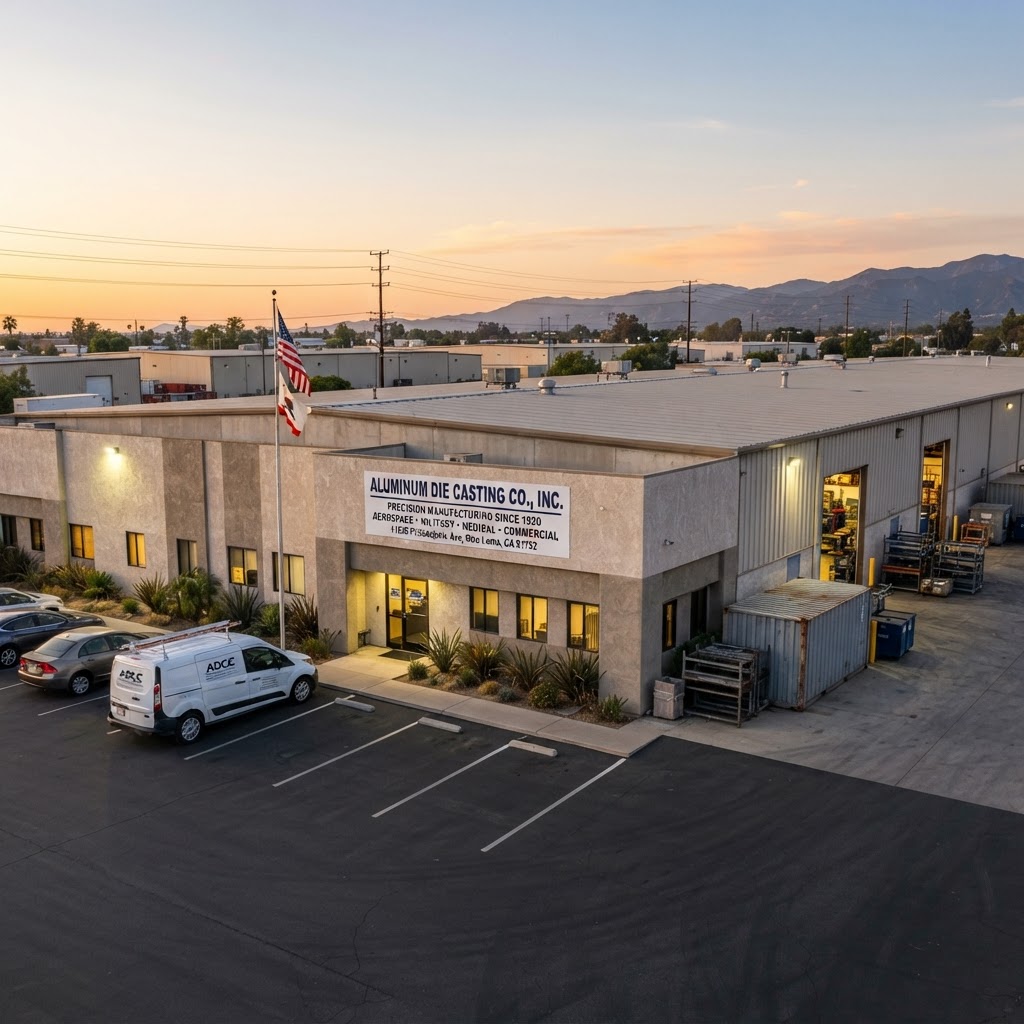
The floor at Aluminum Die Casting Co., Inc. in Mira Loma, California doesn't waste your time. Molten aluminum moves with purpose here — from furnace to die to inspection table — in a rhythm that took decades to develop and three generations of one family to refine. The machines are loud, the tolerances are tight, and the parts leaving this building end up on aircraft and in the hands of the U.S. Military. That's not marketing copy. That's the job.
For sourcing teams and manufacturing engineers who need precision aluminum components without the chaos of navigating an indifferent Tier 1 supplier, this Inland Empire shop deserves a hard look.
Seventy-Plus Years of Doing One Thing Well
Founded in 1950, Aluminum Die Casting Co., Inc. — known in the industry by its web address shorthand, ADC — has been running aluminum through dies since Eisenhower was in the White House. The company has remained privately held and family-owned through three generations, which in American manufacturing is either a testament to exceptional business acumen, genuine craft pride, or both. In ADC's case, it appears to be both.
Three generations of ownership means institutional knowledge runs deep. Process improvements don't get lost in management turnover. Customer relationships don't reset every time a private equity firm reshuffles the org chart. When you call ADC, you're talking to people who have a personal stake in the outcome of your part.
The company operates out of Mira Loma in Riverside County — a region that has quietly become one of Southern California's more productive light industrial corridors, positioned between the aerospace clusters of Los Angeles and the defense contractors scattered across the desert Southwest.
The Process: Die Casting, Machining, Assembly — Under One Roof
ADC's core capability is aluminum die casting, and they run it on digital high-speed die casting equipment that reflects serious capital investment for a shop of their size. Digital controls on die casting machinery aren't just about throughput — they're about repeatability. When you're casting components destined for aerospace applications or military platforms, process consistency isn't a competitive advantage; it's a baseline requirement.
But the story doesn't stop at the die. ADC has built out a full billet CNC machining capability alongside their casting operations. This is where many die casters lose customers — they cast a near-net-shape part and then hand you back a component that still needs significant secondary work. ADC's in-house CNC machining centers allow them to bring that secondary work inside, controlling tolerances, surface finish, and delivery timelines without farming out operations to a third party.
Finishing is also handled internally. Powder-coating and painting round out the shop's capabilities, meaning a procurement manager can source a cast, machined, and finished component from a single vendor. For programs with complex supply chains, that kind of vertical integration in a job shop is genuinely valuable.
Mechanical assembly is the final link in that chain. ADC can take a bag of parts and return a subassembly — a capability that moves them from commodity supplier toward something closer to a manufacturing partner.
Who They Build For
ADC's customer base isn't soft. They produce precision metal components for the aircraft and aerospace industries and manufacture parts for the U.S. Military. These are demanding end markets with zero tolerance for shortcuts.
To serve those customers legally and consistently, ADC holds two quality certifications that matter in these sectors: ISO 9001 for general quality management systems, and AS9100 — the aerospace-specific quality standard that governs everything from design control to risk management to nonconformance procedures. Holding AS9100 certification is not a passive achievement. It requires ongoing audits, documented processes, and a quality culture that has to be lived on the floor, not just printed on a wall.

What will it take to turn demand into delivered output?
Explore The Capacity Imperative, our report on U.S. advanced manufacturing and the priorities shaping 2027.
For procurement professionals sourcing to aerospace or defense programs, AS9100 certification is frequently a non-negotiable supplier qualification requirement. ADC has done that work.
Production Volumes: Built for the Middle Market
ADC positions itself deliberately in the short to medium production run space — 50 to 100,000 units. This is a strategically smart lane. The giant casting houses aren't particularly interested in 500-piece orders. Small job shops may not have the process control infrastructure to handle 50,000 units consistently across a production run.
ADC occupies the ground between those poles. For program managers dealing with low-rate initial production, legacy part replacement programs, or annual buy quantities in the thousands rather than the millions, that production window is exactly where they need a vendor to live.
It also means ADC has developed the operational flexibility to shift between programs without the rigidity that plagues larger-volume-only shops. Setup discipline, tooling management, and scheduling agility all matter at these volumes — and a shop that has been running them for 70-plus years has figured out how to do it profitably without cutting corners.
What Makes This Shop Different
There are aluminum die casters up and down California, and more scattered across the country. What separates ADC isn't any single piece of equipment or any single certification. It's the combination of factors that are genuinely hard to replicate:
Third-generation family ownership means decisions are made by people whose names are on the building. Quality escapes don't just cost a quarterly bonus — they cost a legacy.
AS9100 certification in a shop of 50–100 people is not common. Most shops at this headcount haven't made the investment or built the quality infrastructure to earn and maintain that credential. ADC has.
Integrated casting, machining, finishing, and assembly reduces supply chain complexity for the customer. One purchase order. One point of contact. One throat to grab if something goes wrong.
Decades of aerospace and defense experience at this scale means their team has seen edge cases, difficult alloys, tight tolerances, and demanding customer audits — and kept the lights on through all of it.
Procurement teams and manufacturing engineers looking to qualify new suppliers can review ADC's full capabilities at Visit Aluminum Die Casting Co., Inc. — the site outlines their process capabilities, certifications, and contact information for RFQ submissions.
About Aluminum Die Casting Co., Inc.
- Founded: 1950
- Location: Mira Loma, California
- Ownership: Third-generation family-owned and operated
- Employees: Approximately 50–100
- Core Capabilities: Aluminum die casting, billet CNC machining, mechanical assembly, powder-coating, and painting
- Production Range: 50 to 100,000 units
- Certifications: ISO 9001, AS9100
- End Markets: Aircraft, aerospace, U.S. Military
- Website: adc3900.com
Where to Find Them
Aluminum Die Casting Co., Inc. is located in Mira Loma, California, in the heart of Southern California's Inland Empire — well-positioned to serve aerospace and defense customers across the region and beyond.
For sourcing inquiries, RFQ submissions, or capability reviews, visit them directly at Visit Aluminum Die Casting Co., Inc..
Sponsored by Manufacturing Ultra
This Manufacturer Spotlight is brought to you by Manufacturing Ultra — a zero-upfront-cost website development and digital growth program built exclusively for American manufacturers. Whether you need a modern website, SEO, or digital marketing, Manufacturing Ultra delivers without the upfront cost. Visit manufacturingultra.com to learn how they help shops like Aluminum Die Casting Co., Inc. grow their digital presence.

