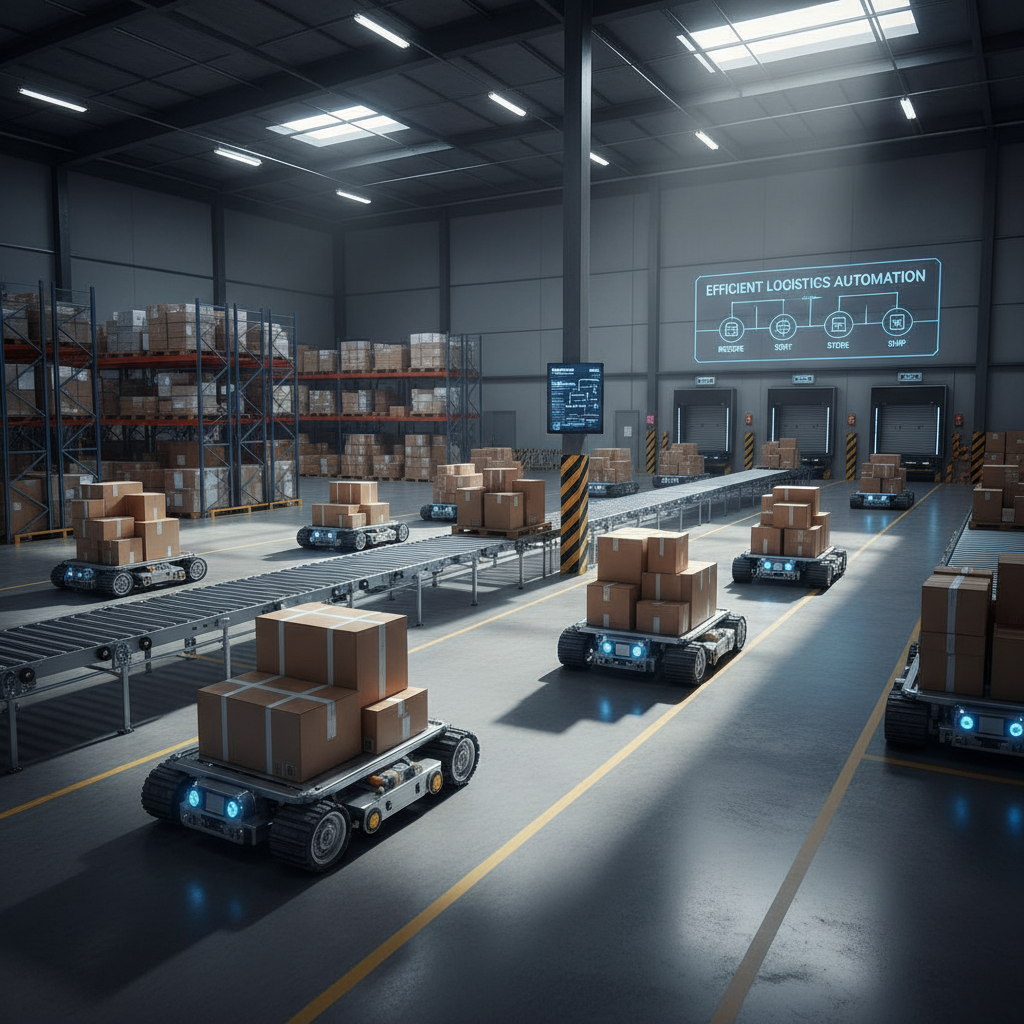

The Rise of Mobile Autonomous Robots in Warehouse and Distribution
The forklift driver shortage isn't coming. It's already here - and the distribution centers still waiting on a hiring solution are the ones watching throughput collapse in real time. Mobile autonomous robots aren't a future hedge anymore. They're an operational necessity being deployed at scale by companies like Amazon, DHL, and Walmart, and the gap between early adopters and laggards is widening every quarter.
If you run a warehouse, a distribution hub, or a fulfillment operation, this is your briefing.
What We Mean When We Say MAR
Mobile Autonomous Robots (MARs) is the umbrella term covering a spectrum of self-navigating platforms designed to move materials without human operators. The category has matured well beyond novelty:
- Autonomous Mobile Robots (AMRs) - navigate dynamically using onboard sensors, LiDAR, and AI-driven path planning. They reroute around obstacles in real time.
- Autonomous Guided Vehicles (AGVs) - follow fixed routes via magnetic tape, floor markers, or embedded wires. Cheaper upfront, less flexible.
- Goods-to-Person (GTP) systems - robots like those deployed in Amazons Kiva-derived network retrieve entire shelving pods and bring them to stationary pickers.
- Autonomous Forklifts - full pallet movers operating in rack-dense environments. Companies like Seegrid and Vecna Robotics have pushed this category hard into industrial distribution.
The critical distinction operations teams need to internalize: AGVs require you to redesign your floor around the robot. AMRs redesign themselves around your floor. That difference drives every ROI and deployment conversation downstream.
Why Adoption Is Accelerating Now
Three forces have converged to make this moment different from the previous decade of robotics hype.
1. Labor market reality is structural, not cyclical. The Bureau of Labor Statistics has documented persistent shortages in warehousing and transportation. The workforce pipeline for repetitive material handling roles is not recovering to pre-pandemic norms. Operations executives who treated the last few years as a temporary aberration are now recalibrating.
2. Robot-as-a-Service (RaaS) destroyed the CapEx barrier. The traditional objection - "we can't afford a full robotics deployment" - has been systematically dismantled. Providers like 6 River Systems (acquired by Shopify, then spun back out), Locus Robotics, and Fetch Robotics built subscription models that convert robotics from a capital project into an operating expense. A mid-sized 3PL can now deploy a fleet of collaborative AMRs on a per-pick or monthly basis without a multimillion-dollar commitment.
3. The software stack finally caught up to the hardware. Early AMR deployments struggled with warehouse management system integration, fleet orchestration at scale, and mixed-environment traffic management. Those problems aren't solved perfectly, but platforms like MiR (Mobile Industrial Robots), Honeywell Intelligrated, and Manhattan Associates have invested heavily in fleet management middleware that lets robots operate alongside humans without constant IT intervention.

What will it take to turn demand into delivered output?
Explore The Capacity Imperative, our report on U.S. advanced manufacturing and the priorities shaping 2027.
Where MARs Are Delivering Real Value
Strip away the vendor marketing and the actual ROI clusters around specific use cases:
Piece-picking and order fulfillment support - Collaborative AMRs that follow pickers through zones, eliminating walking time. Locus Robotics and 6 River Systems built their businesses here. The productivity gains on picks-per-hour in high-SKU environments are well-documented across 3PL clients.
Pallet transport and replenishment - Autonomous forklifts and tugger AMRs handling repetitive lane-to-lane movement. This is where Seegrid has gone deep with automotive-adjacent manufacturers and large grocery DCs.
Receiving and putaway - Historically chaotic and labor-intensive. AMRs paired with vision systems are beginning to automate directed putaway in facilities with high inbound variability.
Cross-docking operations - Tight timing, high throughput, low margin for error. AMRs reduce the dependency on precise human choreography in trailer-to-trailer operations.
What these use cases share: they involve high-frequency, repetitive movement through defined physical spaces. That's exactly where autonomous navigation earns its keep.
The Integration Challenges Nobody Advertises
Deployments fail - or underperform - for predictable reasons. Executives should pressure vendors on all of these before signing:
- WMS/WES integration depth - A robot that can't receive real-time task assignments from your warehouse execution system is an expensive floor obstacle. Demand API documentation upfront.
- Fleet scalability - How does the system perform when you go from 10 robots to 60? Traffic management algorithms that work at small scale often degrade. Test it.
- Human-robot interface design - Worker resistance is real. Facilities that invest in change management and intuitive human-facing UX on the robots see faster adoption curves.
- Maintenance and uptime SLAs - RaaS models shift maintenance responsibility to the vendor, but you need contractual uptime guarantees tied to penalty clauses. Friendly SLAs are not SLAs.
- Physical environment readiness - Floor flatness tolerances, lighting consistency, aisle width standards, and racking configurations all affect AMR performance. Conduct an honest facility audit before deployment scoping.
What This Means for Your Floor
If you're an operations director evaluating MARs in the next 12 months, here's what the evidence points to:
Start with a constrained, high-volume use case. Don't pilot in your most complex zone. Find the repetitive, high-frequency movement problem that's currently eating labor hours and map it cleanly. AMR pilots succeed when the problem is narrow and the baseline metrics are clear.
Don't let IT own the deployment. Robotics deployments that get handed entirely to IT teams tend to optimize for system integration at the expense of floor-level operational logic. Keep operations leadership in the decision seat.
Treat your workforce as a deployment variable, not a headcount problem. The facilities seeing the best throughput gains are pairing robots with workers in collaborative models - not replacing pickers, but eliminating their non-value-added movement. That framing matters for morale, retention, and actual performance.
Evaluate vendors on their fleet management software, not their hardware specs. The robot chassis matters less than the orchestration layer. A faster robot with a weak fleet manager will underperform a slower robot with sophisticated traffic and task optimization.
Build for scale from day one. RaaS makes it easy to start small, but facilities that don't architect their WMS integration and physical layout for eventual fleet expansion end up doing expensive rework at scale.
The warehouses winning on throughput and cost-per-unit right now are not the ones with the newest robots. They're the ones that deployed earlier, iterated faster, and built operational muscle around human-robot collaboration before their competitors accepted that the labor market had permanently changed. That window to build that advantage is narrowing - but it hasn't closed.

