

Inside Stockwell Elastomerics: A Rubber and Gasket Molding Shop Built on Precision and Pride
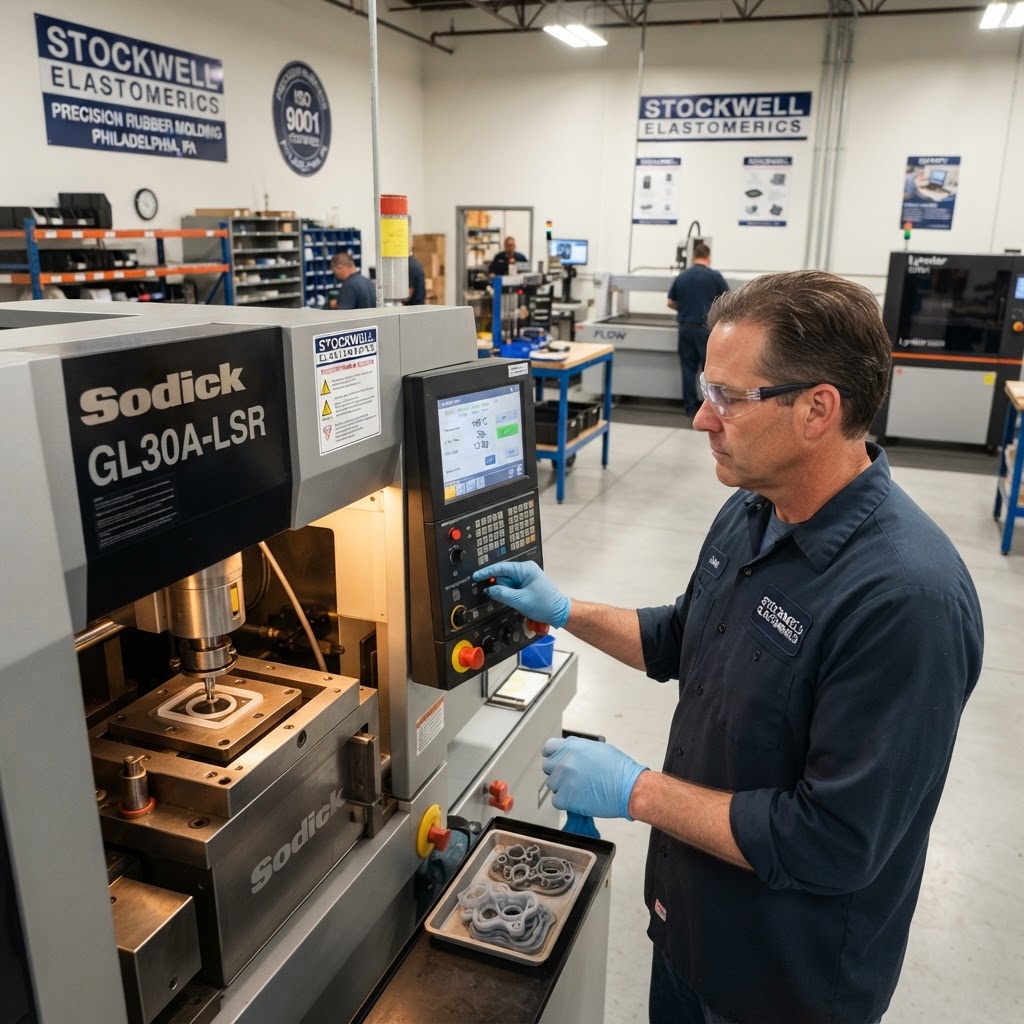
The smell hits you first — that distinct, slightly sweet scent of curing silicone rubber that clings to the air of any serious elastomer shop. At Stockwell Elastomerics in Philadelphia, Pennsylvania, the floor hums with the rhythm of compression presses cycling down, LIM machines injecting liquid silicone into precision tooling, and waterjet cutters tracing tight geometries through sheet stock with a quiet, methodical confidence. This isn't a flashy operation. It's a working shop — the kind where the equipment is well-maintained, the people know their materials cold, and every part that leaves the building has been accounted for.
Stockwell has been at this since 1919. More than a century of making rubber components in a country that has shed countless manufacturers over the decades. That alone is worth paying attention to.
A Century in the Making
Founded over 100 years ago, Stockwell Elastomerics has survived the full arc of American industrial history — two world wars, the offshoring wave of the 1980s and 1990s, and the constant churn of evolving customer demands. The company didn't survive by standing still. It evolved into a specialty fabricator and molder focused on high-performance silicone rubber components, serving markets where a failed gasket isn't an inconvenience — it's a system failure.
Today, the company operates out of its Philadelphia facility with a workforce of roughly 100 to 150 people. That headcount tells you something. This isn't a garage operation, and it isn't a massive contract manufacturer running anonymized parts by the million. It's a mid-size specialty shop with enough depth to handle complex work and enough focus to actually know what it's doing.
What They Make
The core of Stockwell's business runs through four product categories: custom gaskets, silicone pads, EMI shielding gaskets, and specialty molded rubber components. The common thread is silicone — a material that earns its place in demanding applications because of its thermal stability, chemical resistance, and long-term compression set performance.
Custom gaskets are the bread and butter. These aren't off-the-shelf ring gaskets from a catalog. They're engineered-to-print components cut or molded to meet specific sealing requirements — tight tolerances, specific durometers, defined compression loads. The applications span medical devices, industrial enclosures, electronics assemblies, and military hardware.
EMI shielding gaskets represent one of the more technically demanding segments of their work. Electromagnetic interference shielding requires materials that are both electrically conductive and mechanically compliant — they have to maintain contact force across a sealing interface while blocking RF energy. Getting that right takes material science knowledge and process control that most shops simply don't have.
Silicone pads — thermal interface pads, cushioning pads, protective liners — serve the electronics and defense markets where managing heat, vibration, and mechanical stress matters. These are components that rarely get attention unless they fail, which means the tolerance for error is essentially zero.
The Equipment Stack
Stockwell runs three core process technologies that together give the shop a broad fabrication envelope.
Liquid Injection Molding (LIM) is the precision end of the operation. LIM uses two-part liquid silicone rubber injected under controlled pressure into closed tooling. The result is a dimensionally consistent, flash-minimized part with excellent mechanical properties. It's the right process for complex geometries, tight tolerances, and production runs where consistency from part to part is non-negotiable.

What will it take to turn demand into delivered output?
Explore The Capacity Imperative, our report on U.S. advanced manufacturing and the priorities shaping 2027.
Compression molding handles a different range of work — typically larger cross-sections, stiffer materials, or applications where LIM tooling costs aren't justified by volume. It's a proven process with deep roots in rubber manufacturing, and running it well requires knowing your materials and your press cycles. Stockwell has been doing it long enough that this knowledge is institutional.
Waterjet cutting rounds out the capability set, particularly for fabricated gaskets cut from sheet, roll, or slab stock. Waterjet is a cold-cutting process — no heat-affected zones, no burned edges, clean geometry on complex profiles. It's efficient for low-to-mid volume work where hard tooling isn't the right answer economically.
The combination means Stockwell can respond to a sourcing need across a wide range of volumes, geometries, and material specifications without sending work outside.
What Makes This Shop Different
The differentiator that comes up consistently with shops like Stockwell isn't just equipment — it's application engineering support. A lot of fabricators will take your print and quote it. Stockwell's reputation is built partly on engaging earlier in the design process, helping engineers figure out what the part actually needs to be before the drawing is finalized.
That matters more than it sounds. Silicone rubber is a forgiving material in some respects and an unforgiving one in others. Compression set, durometer selection, surface finish, parting line location, draft angles for molded parts — these are decisions that affect whether a gasket performs in service or causes a warranty return. Having a supplier who can walk through those tradeoffs with your design team is worth something real, especially in technology-driven markets where the components are small, the tolerances are tight, and the cost of a field failure is significant.
For procurement managers and sourcing engineers, the depth of Stockwell's technical documentation and the accessibility of their engineering team is a practical resource. Their website at Visit Stockwell Elastomerics is organized around materials and applications — making it a useful starting point for any team trying to understand what's possible before they pick up the phone.
Customer Base and Markets
Stockwell's customer base skews toward technology-intensive industries: electronics, defense, medical devices, telecommunications, and industrial equipment. These are sectors where dimensional precision, material traceability, and process documentation aren't optional. They're table stakes.
The defense and medical markets in particular demand a level of quality system discipline — controlled material lots, documented processes, inspection records — that filters out shops that aren't serious. Stockwell has been serving these markets long enough that the quality infrastructure is embedded in how they operate, not bolted on as an afterthought.
About Stockwell Elastomerics
- Founded: 1919
- Location: Philadelphia, Pennsylvania
- Employees: Approximately 100–150
- Specialties: Silicone rubber molding, EMI shielding gaskets, custom gasket fabrication
- Key Processes: Liquid injection molding (LIM), compression molding, waterjet cutting
- Markets Served: Electronics, defense, medical, telecommunications, industrial
- Website: www.stockwell.com
Where to Find Them
Stockwell Elastomerics operates from its Philadelphia, Pennsylvania facility — a domestic manufacturer with over a century of continuous operation and a full range of silicone fabrication and molding capabilities.
For sourcing inquiries, technical questions, or application support, their team and full product capabilities are accessible at Visit Stockwell Elastomerics. If your program requires precision silicone components with engineering support behind them, this is a shop worth a serious look.
Sponsored by Manufacturing Ultra
This Manufacturer Spotlight is brought to you by Manufacturing Ultra — a zero-upfront-cost website development and digital growth program built exclusively for American manufacturers. Whether you need a modern website, SEO, or digital marketing, Manufacturing Ultra delivers without the upfront cost. Visit manufacturingultra.com to learn how they help shops like Stockwell Elastomerics grow their digital presence.

