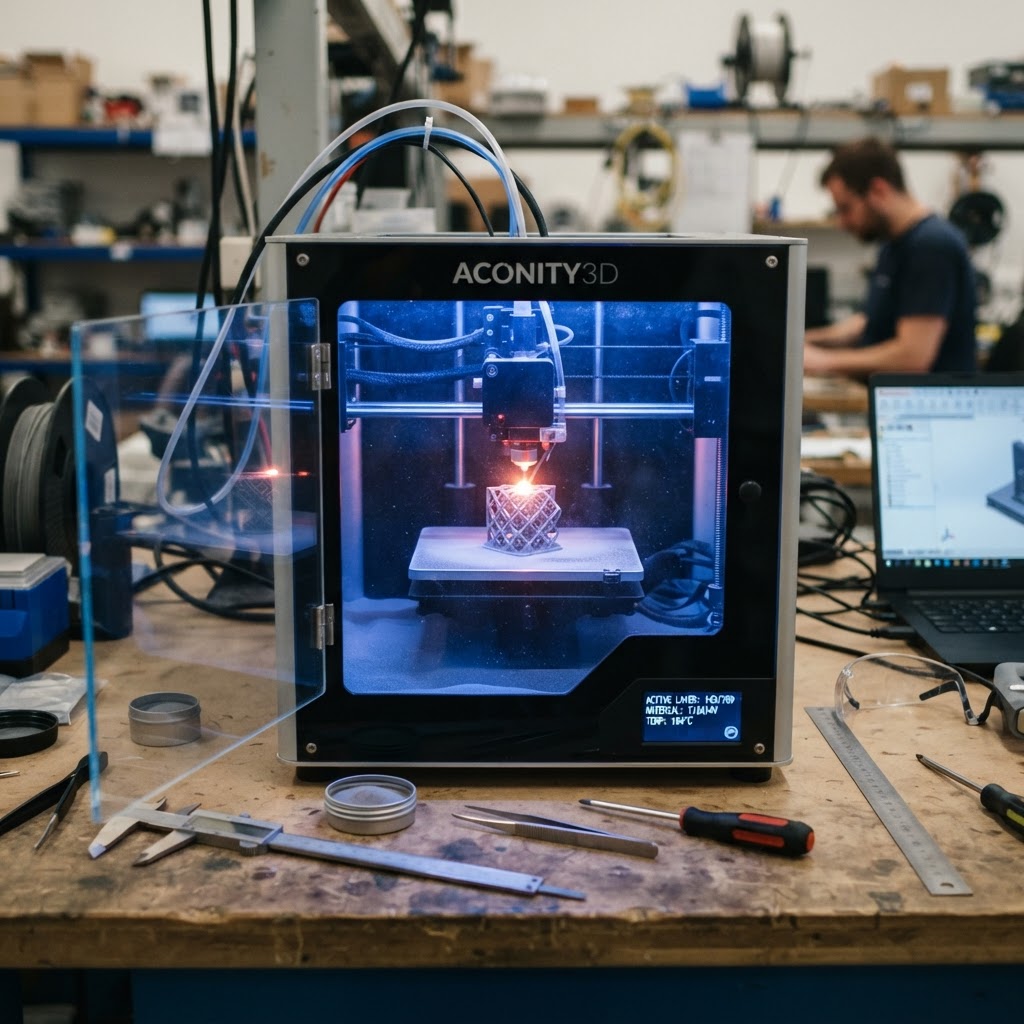

3D Printing Just Made Your Old Inventory Strategy Obsolete
Your warehouse full of spare parts is a liability now. Additive manufacturing didn't just change how parts are made — it killed the logic behind how you stock them.
What Exactly Is Breaking Down?
Traditional inventory strategy is built on one assumption. You need parts on hand before you need them. That assumption is crumbling fast.
On-demand additive manufacturing means critical components can be printed when needed. Not ordered. Not warehoused. Printed.
The old model created real costs:
- Capital locked in slow-moving stock
- Warehouse space eaten by low-frequency parts
- Obsolescence risk on components tied to discontinued equipment
- Supply chain disruption exposure at every tier
Those costs were accepted because there was no alternative. Now there is.
So Why Are Manufacturers Still Sitting on Dead Stock?
Habit is powerful. So is organizational inertia.
Many procurement teams still optimize for bulk discounts. Finance still measures inventory turns the old way. Nobody got fired for ordering extra bearings.
But the math is shifting. Siemens has already moved toward digital spare parts libraries. Physical stock gets replaced by certified print files. That is not a future concept — it is operational today.
"The warehouse of the future isn't a room full of parts. It's a server full of validated files and a printer on the floor."
The manufacturers who ignore this are paying a premium to feel safe. That premium is getting harder to justify.
Who Is Actually Doing This Right?
A few names are worth watching closely.
Airbus has integrated additive manufacturing into its spare parts supply chain for aircraft components. Porsche uses 3D printing to reproduce discontinued classic car parts on demand. These are not startups experimenting. These are scaled operations proving the model works.

What will it take to turn demand into delivered output?
Explore The Capacity Imperative, our report on U.S. advanced manufacturing and the priorities shaping 2027.
On the industrial side, GE Aerospace has printed over 100,000 fuel nozzles using additive methods. The quality bar is there. The reliability is there.
The pattern is consistent across industries:
- Start with low-volume, high-criticality parts
- Build a validated digital parts library
- Qualify print-on-demand suppliers or in-house capacity
- Retire physical stock category by category
This is not a rip-and-replace overnight. It is a deliberate migration.
What Should You Actually Change Tomorrow?
Start with an audit. Pull your slowest-moving SKUs. Identify parts with long lead times and low demand frequency. Those are your first candidates for digital conversion.
Then ask your engineering team one question. Can this part be printed to spec? For many components, the answer is already yes. [The America Makes national additive manufacturing institute has published qualification frameworks to guide exactly this process.
Next, pressure-test your supplier relationships. Are any of your current vendors offering certified digital inventories? If not, that gap is your leverage point in the next contract negotiation.
The shift does not require a full factory overhaul. It requires a mindset update and a smarter parts classification system.
The manufacturers who treat additive manufacturing as a production tool but leave their inventory strategy untouched are solving half the problem and paying full price.
Sources: GE Additive · Stratasys On-Demand · America Makes · Airbus Additive Manufacturing · Siemens Additive

