
Automakers Face Manufacturing Milestones and Massive Software-Related Vehicle Recalls: What Manufacturing Leaders Need to Know This Week
By Marcus D. Holloway, Editor in Chief, Strata Intelligence | September 25, 2026
Two developments this week draw a sharp fault line through the electric vehicle industry: one signals the arrival of commercial EV manufacturing at genuine industrial scale, the other exposes how a single line of defective code can unravel years of customer trust across an entire fleet. Both carry immediate, compounding consequences for every tier of the US automotive supply chain.
Tesla's Nevada Semi Factory Is a Production Signal Every Fleet Operator Must Price Into Their Plans
Tesla officially opened its 1.7-million-square-foot Semi manufacturing facility in Sparks, Nevada this week, designed to produce up to 50,000 Class 8 electric trucks annually. The scale of this facility is not incremental — it represents the single largest purpose-built commercial electric vehicle plant in North America, and its opening shifts the question from whether battery-electric heavy trucking is viable to at what cost and for whom.
The answer to that cost question, however, landed harder than many fleet operators anticipated. The 500-mile Long Range Semi is now officially priced starting at $290,000 — a figure substantially higher than projections that circulated during the truck's original 2017 reveal and subsequent delay cycle. For C-suite decision-makers evaluating fleet electrification timelines, this number demands a recalculation. Read more
Immediate implications for fleet operators and procurement directors:
- Total cost of ownership math shifts significantly. At $290,000 per unit, the payback period against a diesel Class 8 truck — which typically prices between $150,000 and $200,000 fully spec'd — extends well beyond what most fleet finance models assumed at $150,000–$180,000 Semi estimates. Fuel savings and maintenance reduction will need to be modeled against a higher capital baseline.
- Volume commitments create leverage, but also lock-in risk. A 50,000-unit annual capacity means Tesla will be aggressively pursuing large fleet contracts. Procurement directors should expect structured volume agreements with price protections tied to charging infrastructure commitments.
- Charging infrastructure remains the co-investment obligation. Operating a Semi fleet at scale requires access to Tesla's Megacharger network, which is expanding but remains geographically concentrated. Fleet operators in agricultural, mining, or distributed logistics corridors must factor independent charging infrastructure costs into capital planning.
- Sparks, Nevada as a regional supplier hub. Tier 1 and Tier 2 suppliers serving the Semi program should be actively assessing proximity to the Tahoe Reno Industrial Center, where Tesla's facility sits. Lead time compression and just-in-time delivery expectations will intensify as production ramps.
"The Semi factory's opening doesn't validate the business case for every fleet operator — it validates Tesla's manufacturing capability while forcing everyone else to rebuild their financial models from scratch."
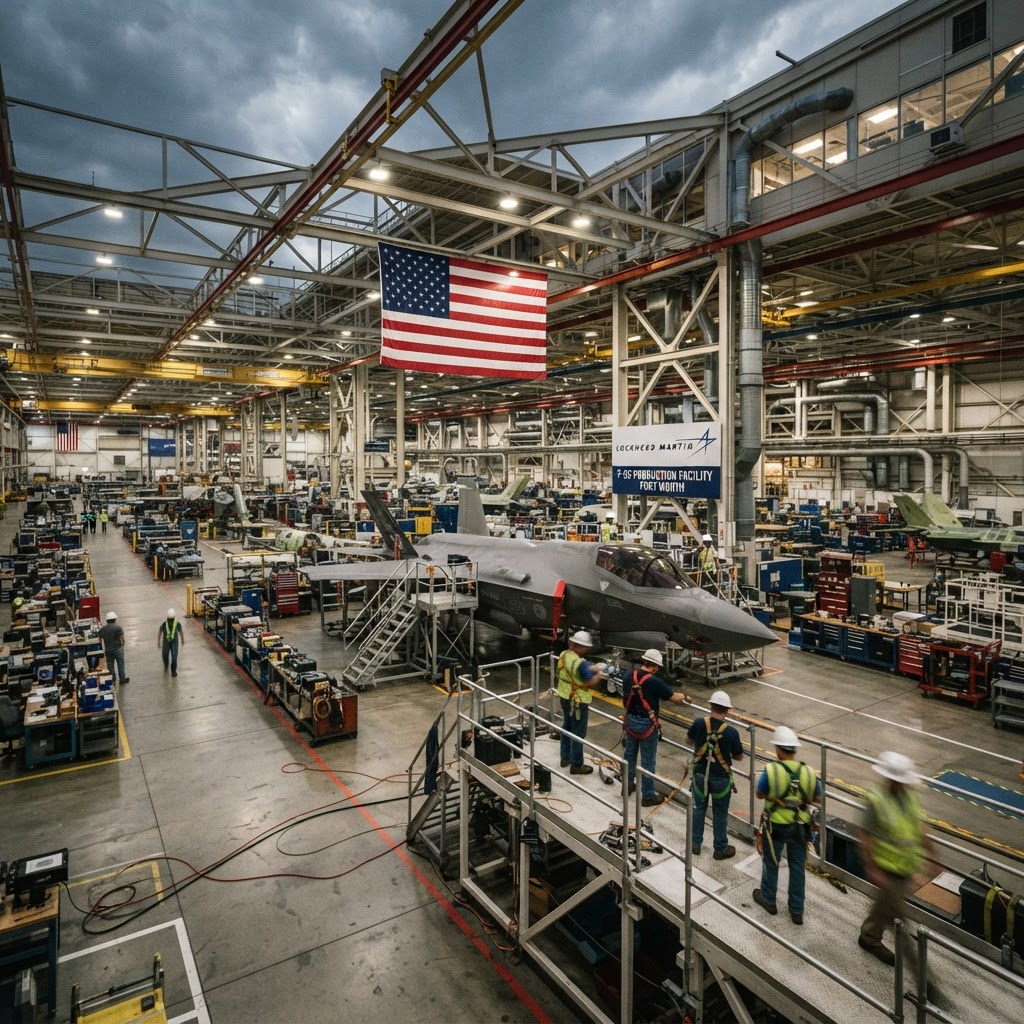
For plant operators in the broader heavy vehicle supply chain, the Sparks facility also signals what high-volume EV manufacturing infrastructure looks like at maturity: vertically integrated, high-automation, and designed around battery system logistics rather than traditional powertrain assembly flows. Suppliers not already aligned to that architecture face a structural disadvantage.
Rivian's 99,000-Vehicle Recall Is a Warning Shot Across Every Software-Defined Vehicle Program in the Industry
Rivian this week issued a recall covering nearly 99,000 electric vehicles — representing more than half of the total vehicles the company has ever delivered to customers. The trigger: a shared software bug affecting multiple models simultaneously. Read more
This is not a routine recall. The scale — more than half of a manufacturer's cumulative production — reflects the defining vulnerability of the software-defined vehicle architecture that the entire industry has spent the past decade racing toward. When software is the vehicle, a single defect is not a localized manufacturing error. It is a fleet-wide event.
What this recall reveals about structural risk in SDV programs:
- Shared codebases create correlated failure risk. Traditional hardware defects are typically limited by manufacturing batch, assembly plant, or component supplier. A software bug that runs on a unified vehicle operating system has no such natural containment boundary. Every vehicle with that build version is exposed simultaneously.
- Over-the-air update capability is now a tier-zero supplier requirement. The ability to push a remediation update without a physical dealer visit is the difference between a manageable recall and a logistical catastrophe. OEMs and their software platform partners — including players like Aptiv, Bosch, and emerging SDV middleware vendors — must treat OTA infrastructure as safety-critical, not as a convenience feature.
- Regulatory posture is hardening. The National Highway Traffic Safety Administration has been expanding its oversight framework for software-related defects. A recall of this magnitude will draw intensified scrutiny and likely accelerate rulemaking around software change management, version control documentation, and pre-deployment validation standards for OTA updates.
- Supplier liability exposure is being repriced. If the root cause traces to a third-party software component or a shared platform stack, the contractual and reputational exposure for that supplier is severe. Procurement directors should be auditing software vendor agreements for indemnification language and recall cost-sharing provisions now, not after the next incident.
For Rivian specifically, the recall arrives at a moment when the company's path to sustained profitability is already under investor scrutiny. A recall affecting this proportion of delivered vehicles introduces service cost burdens, customer confidence risk, and potential fleet contract renegotiation dynamics that compound financial pressure.
The broader lesson for manufacturing leaders: the software-defined vehicle is not a product category — it is an operational philosophy that demands software engineering discipline, quality management systems, and supplier governance frameworks that most of the traditional automotive industry has not yet fully institutionalized.
The Convergence Point: Two Stories, One Strategic Mandate for US Manufacturers
Read together, this week's Tesla and Rivian developments frame a single, non-negotiable strategic reality for US automotive manufacturers and their supplier ecosystems:
Capital-intensive EV manufacturing is arriving at scale, and software risk is arriving with it.
The implications cascade across the value chain in three directions:
- For OEMs: The gap between manufacturing milestone and commercial viability is now primarily a pricing and software reliability problem, not a technology readiness problem. Both must be solved concurrently.
- For Tier 1 and Tier 2 suppliers: Alignment to high-volume EV platform architectures — including software integration requirements — is now a prerequisite for long-term contract positioning. Suppliers still optimized exclusively for internal combustion platforms face accelerating obsolescence risk.
- For plant operators: Workforce capability gaps in software validation, embedded systems testing, and OTA update logistics are operational liabilities. Plants that have not begun upskilling programs in partnership with institutions like Tooling U-SME or technical college consortia are falling behind the curve.
The US Department of Energy's ongoing support for domestic battery manufacturing and commercial vehicle electrification — including programs tied to the Inflation Reduction Act's advanced manufacturing provisions — remains a policy tailwind, but policy support does not resolve pricing gaps or software quality deficits. Those require internal operational discipline.
Editor's Take: Marcus D. Holloway's 90-Day Outlook
In the next 90 days, I expect the following dynamics to define the conversation across the industry:
On the Tesla Semi: Watch the first major fleet contract announcements out of the Sparks facility. The $290,000 price point will not deter large carriers with established fuel cost benchmarks and access to IRA commercial EV tax credits — but it will quietly kill the business case for mid-size regional fleets that cannot absorb the capital exposure. The bifurcation of the addressable market will become visible in Q4 contract activity. Suppliers to the Semi program should treat October through December as their window to lock in volume agreements before Tesla begins applying production leverage.
On Rivian's recall: The post-mortem on the root cause will matter more than the recall itself. If the software defect originated in a shared platform component from a named supplier, expect that supplier's contract pipeline across the industry to tighten immediately. Every OEM program manager is watching. More consequentially, I expect NHTSA to use this event as a catalyst to issue new guidance — possibly in the form of a formal notice of proposed rulemaking — around software change control requirements for SDVs. Manufacturers and their legal teams should be engaging regulatory counsel on compliance positioning before that guidance lands.
The macro frame: The US commercial EV market is entering a phase where the proof-of-concept era is definitively over. What replaces it is an unforgiving competitive environment where manufacturing scale, software reliability, and total cost of ownership credibility are the only metrics that matter to fleet buyers. This week's news makes that transition concrete. Leaders who are still treating EV strategy as a future-state planning exercise are now operating with a deficit that compounds by the quarter.
The window to build the required competencies — in capital structure, software governance, and supplier alignment — is open, but it is not unlimited.
Sources: The Auto Wire — Auto Industry News Roundup · Tesla Semi Official Page · NHTSA Recalls Database · US Department of Energy — Clean Energy Manufacturing · Rivian Investor Relations

