
Inside American Tooling & Machining: A Prototype Machining and Rapid Tooling Shop Built on Precision and Pride
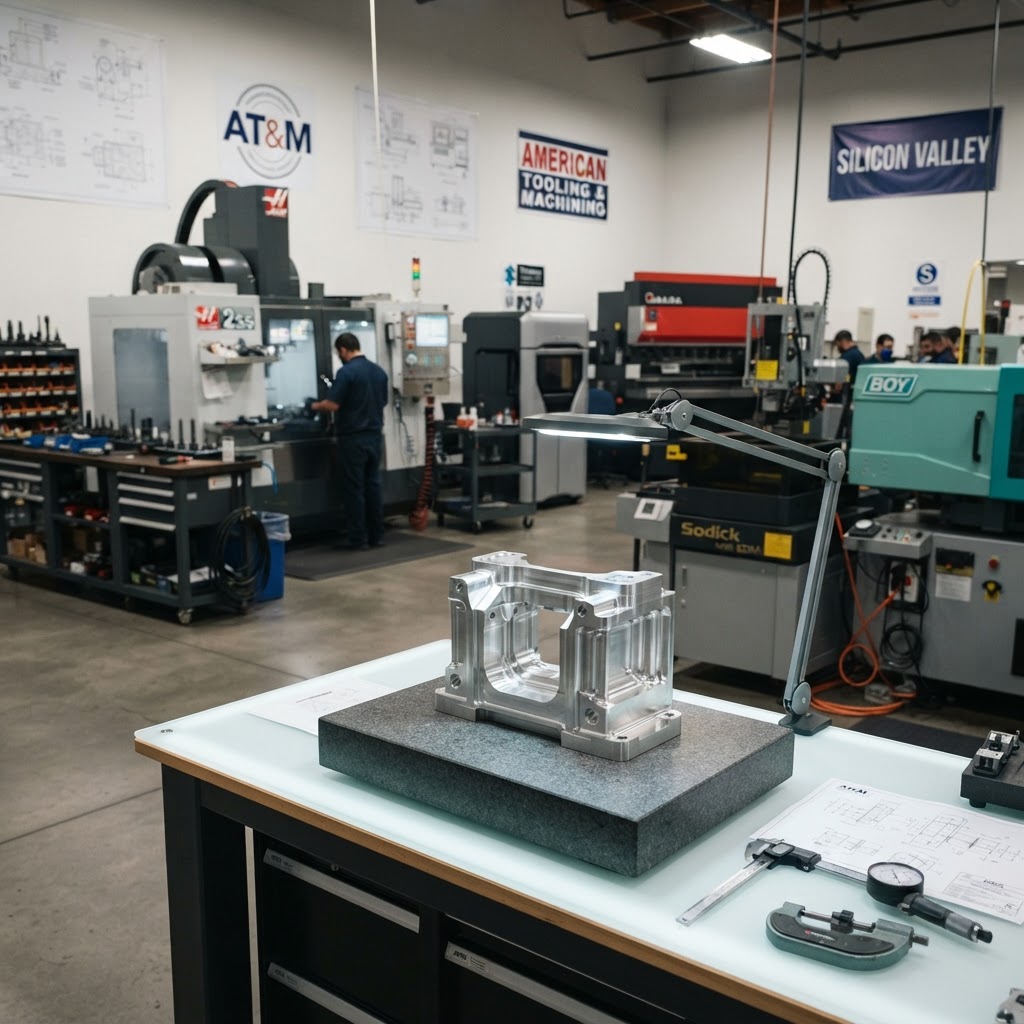
The hum of a CNC spindle at speed is a sound that tells you something is actually getting made. Walk into the American Tooling & Machining facility in Silicon Valley, California, and that sound is steady — not frantic, not intermittent, but the kind of consistent rhythm that comes from a shop that knows exactly what it's doing and why. A technician pulls a freshly cut aluminum prototype from a vise, checks it against a print, and sets it aside. No drama. Just parts, made right.
That's the culture here. In a region better known for software startups and venture capital, American Tooling & Machining occupies a different kind of space — the physical kind, where ideas become hardware and tolerances are held in metal, not code.
Engineering-First, Not Engineering-After
The phrase gets thrown around loosely in this industry, but at American Tooling & Machining, Engineering-First is a structured process, not a tagline. Before a single program is written or a tool path generated, the shop's team engages in Design for Manufacturability (DFM) optimization — working directly with the customer's engineers to identify features that will cause problems downstream, geometries that can be simplified without sacrificing function, and material choices that align with both performance requirements and production economics.
For prototype shops, this is where the real value lives. A customer who brings in a CAD file expecting a straight quote often leaves with a better part design and a clearer path to production. That kind of upstream involvement is what separates a machining partner from a job shop that just cuts what it's handed.
Procurement managers and engineering teams who have dealt with the frustration of receiving parts that technically match the drawing but fail in assembly will recognize exactly what this approach is worth. It's problem prevention instead of problem correction — and in a prototyping environment, where schedules are already compressed, that difference is measured in days and dollars.
The Technology Stack
American Tooling & Machining runs a deliberate combination of technologies that reflects the modern prototype-to-tooling workflow. The floor is anchored by CNC machining centers capable of handling the precision requirements that prototype work demands — tight tolerances, complex geometries, materials ranging from engineering plastics to aluminum alloys to hardened steels.
Layered on top of that traditional machining capability is a 3D printing operation that gives the shop flexibility in the early stages of a program. Where CNC is the right answer for functional metal prototypes and near-production validation parts, additive manufacturing accelerates concept verification, fit checks, and form studies. The combination means a customer isn't forced to choose a technology — the shop chooses the right tool for each stage of the development cycle.
Rounding out the capability set is injection molding equipment, which closes the loop for customers moving from prototype into low-volume or bridge production. This is the capability that makes American Tooling & Machining genuinely useful across the full prototype-to-production arc, not just at the front end of a program. Custom tooling and fixtures round out the offering, supporting both internal production processes and customer-side assembly and test requirements.

What will it take to turn demand into delivered output?
Explore The Capacity Imperative, our report on U.S. advanced manufacturing and the priorities shaping 2027.
Who They Serve
Silicon Valley's hardware ecosystem is dense and demanding. The customer base that surrounds American Tooling & Machining includes medical device developers, consumer electronics manufacturers, defense and aerospace contractors, and the steady stream of hardware startups that need physical parts fast and need them right. These are customers with real schedules, real engineers, and real consequences when a prototype doesn't arrive on time or doesn't perform as expected.
The shop's 24/7 support capability speaks directly to that environment. Development programs don't run on a nine-to-five schedule. When an engineering team is working through the night ahead of an investor demo or a design review, having a manufacturing partner that can be reached and that can respond is not a nice-to-have — it's a program requirement. American Tooling & Machining has built its operational model around that reality.
For sourcing teams evaluating potential machining partners, the shop's website at Visit American Tooling & Machining provides a solid starting point for understanding capabilities, submitting inquiries, and initiating the quoting process. It's a practical resource for procurement professionals who need to qualify a vendor quickly.
What Makes This Shop Different
There are thousands of CNC shops in California. A smaller number can do 3D printing. Fewer still offer injection molding under the same roof. But the differentiator at American Tooling & Machining isn't purely the equipment list — it's the integration of those capabilities behind a single engineering-driven process.
A shop that machines, prints, and molds but operates each capability as a separate silo delivers less value than one that coordinates them around the customer's development objective. The DFM engagement, the cross-technology flexibility, and the around-the-clock availability all point to an operation that has organized itself around what hardware development actually looks like in practice: iterative, fast-moving, and unforgiving of delays.
For a company with a headcount in the 10-to-50 range, that level of integration reflects a deliberate strategic choice. Staying focused on prototype machining and rapid tooling — rather than chasing high-volume production contracts — allows the team to stay sharp on the work that requires genuine engineering judgment, not just throughput.
There's something worth respecting about a shop that knows its lane and runs it well.
About American Tooling & Machining
- Location: Silicon Valley, California
- Founded: Approximately 2010s
- Employees: 10–50
- Core Specialties: Prototype Machining, Rapid Tooling, Engineering-Driven Manufacturing
- Technology: CNC Machining Centers, 3D Printing Systems, Injection Molding Equipment
- Key Capabilities: Custom Precision Parts, Rapid Prototypes, 3D Printed Components, Custom Tooling and Fixtures
- Notable: Engineering-First process with DFM optimization; 24/7 client support
- Website: amtoolingmachining.com
Where to Find Them
American Tooling & Machining operates out of Silicon Valley, California — positioned at the center of one of the most active hardware development ecosystems in the United States. Engineering teams, procurement managers, and operations leaders looking to source precision prototypes, rapid tooling, or custom machined components can reach the shop directly through their website.
Visit American Tooling & Machining
If your program needs a machining partner that brings engineering judgment to the table before the first chip hits the floor, this is a shop worth a conversation.
Sponsored by Manufacturing Ultra
This Manufacturer Spotlight is brought to you by Manufacturing Ultra — a zero-upfront-cost website development and digital growth program built exclusively for American manufacturers. Whether you need a modern website, SEO, or digital marketing, Manufacturing Ultra delivers without the upfront cost. Visit manufacturingultra.com to learn how they help shops like American Tooling & Machining grow their digital presence.

